It has been a common complaint among survival game enthusiasts: for all the crafting, building, and scavenging on offer, magic has remained stubbornly absent from most titles. Yet in recent years, a quiet revolution has been underway. Developers are finally weaving sorcery into the fabric of survival gameplay, and the results are spellbinding.
Why were studios so reluctant to blend magic with survival for so long? The fear was that arcane powers might trivialize the core loop of resource gathering and tool degradation. After all, why craft a new pickaxe when you can just summon a fireball to mine ore? But a string of innovative releases has proved that magic and survival can not only coexist but enrich one another. The question now is not whether magic belongs in a survival game, but why it took the genre so long to embrace it.
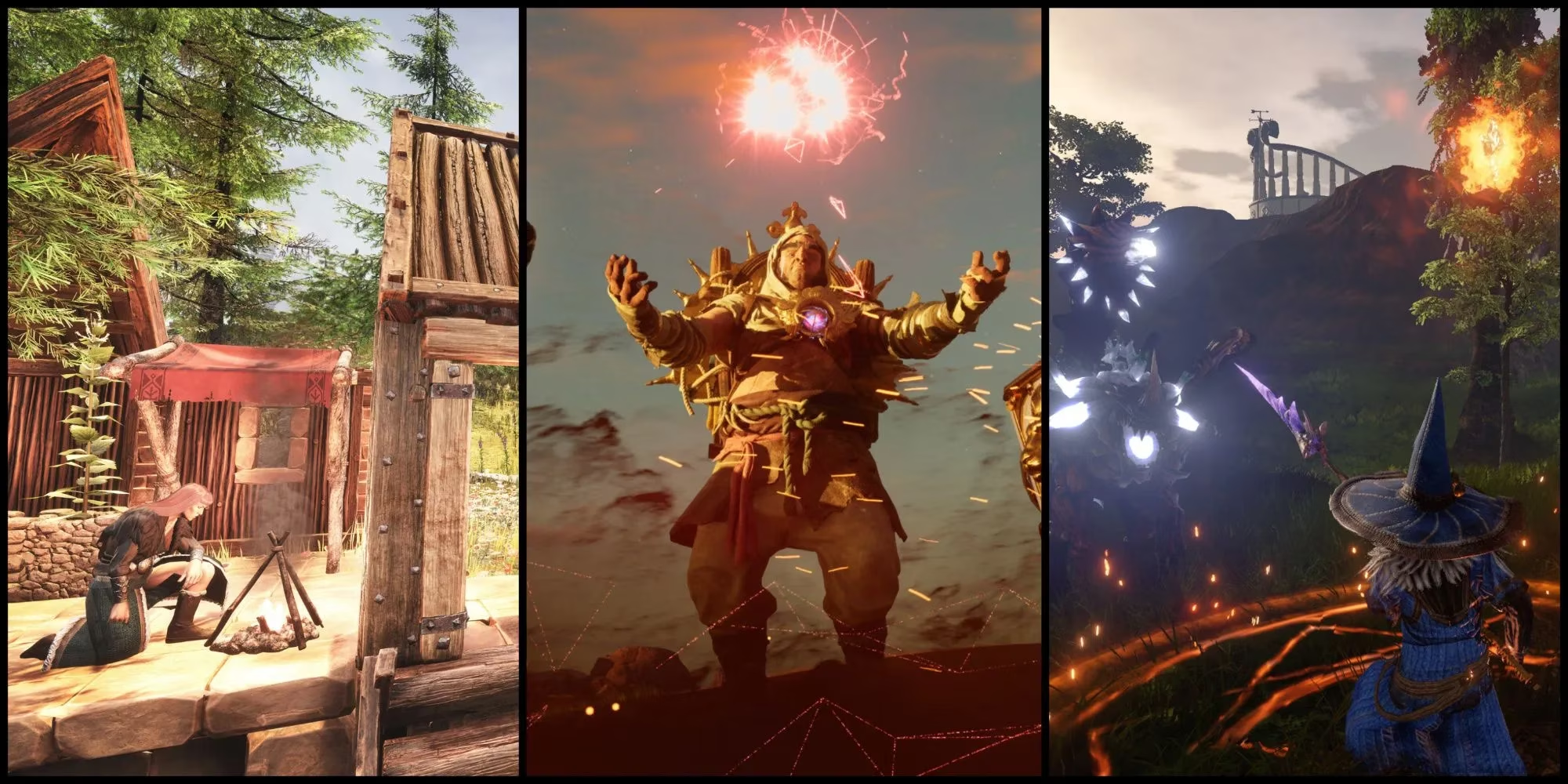
Mining, Crafting, and Conjuring: The New Breed of Survival Games
The fusion of magic and survival didn't happen overnight. It required a careful balancing act—one that several standout titles have managed with flair. Their approaches vary, but they all share a common insight: magic doesn't have to replace the core struggle; instead, it can deepen it.
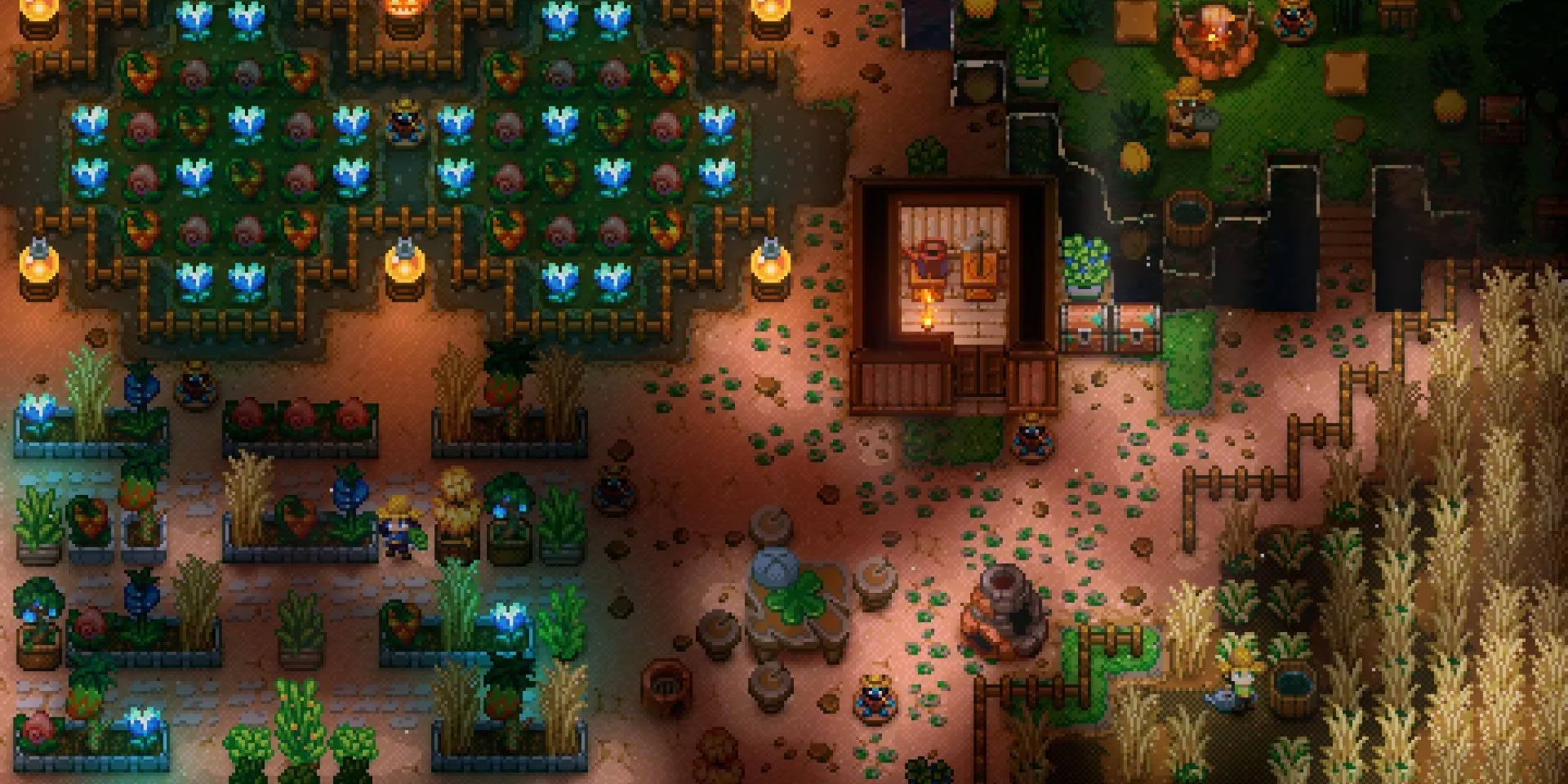
Core Keeper: Subterranean Sorcery
In Core Keeper, up to eight players descend into an endless cave system to mine rare minerals and craft ever-better gear. At first glance, it's a classic survival loop. But look deeper and you'll find a robust magical undercurrent. The game doesn't hand you spellbooks; rather, it hides magical power inside items you craft. A late-game magic build is entirely viable—provided you pour hours into gathering the right components. This design choice turns magic into a reward for dedication, not a shortcut. Isn't that a far more satisfying way to earn your thunderbolt?
Tribes of Midgard: Class-Based Chaos
Tribes of Midgard blends survival with action RPG elements across two modes: the endless survival of any classic, and the village-defense of Saga Mode. Its magic system is cleverly tied to eight classes, but not in the way you'd expect. Every class can cast spells via items, yet the most devastating combat mage is often the Warrior—while the Seer plays a more traditional support role. What does this tell us? That rigid class boundaries are fading, and survival games are daring players to experiment.
Don't Starve: Dark Comedy and Darker Magic
Klei's punishing masterpiece never needed a conventional magic system to feel magical. Instead, Don't Starve offers a twisted array of arcane artifacts: a musical instrument that befriends monsters, a bat weapon made from a living bat, and a teleportation rod. The line between magic and madness is thin, and that's precisely the point. In a world where your sanity is a resource, doesn't it make sense that magic should be equally unhinged?
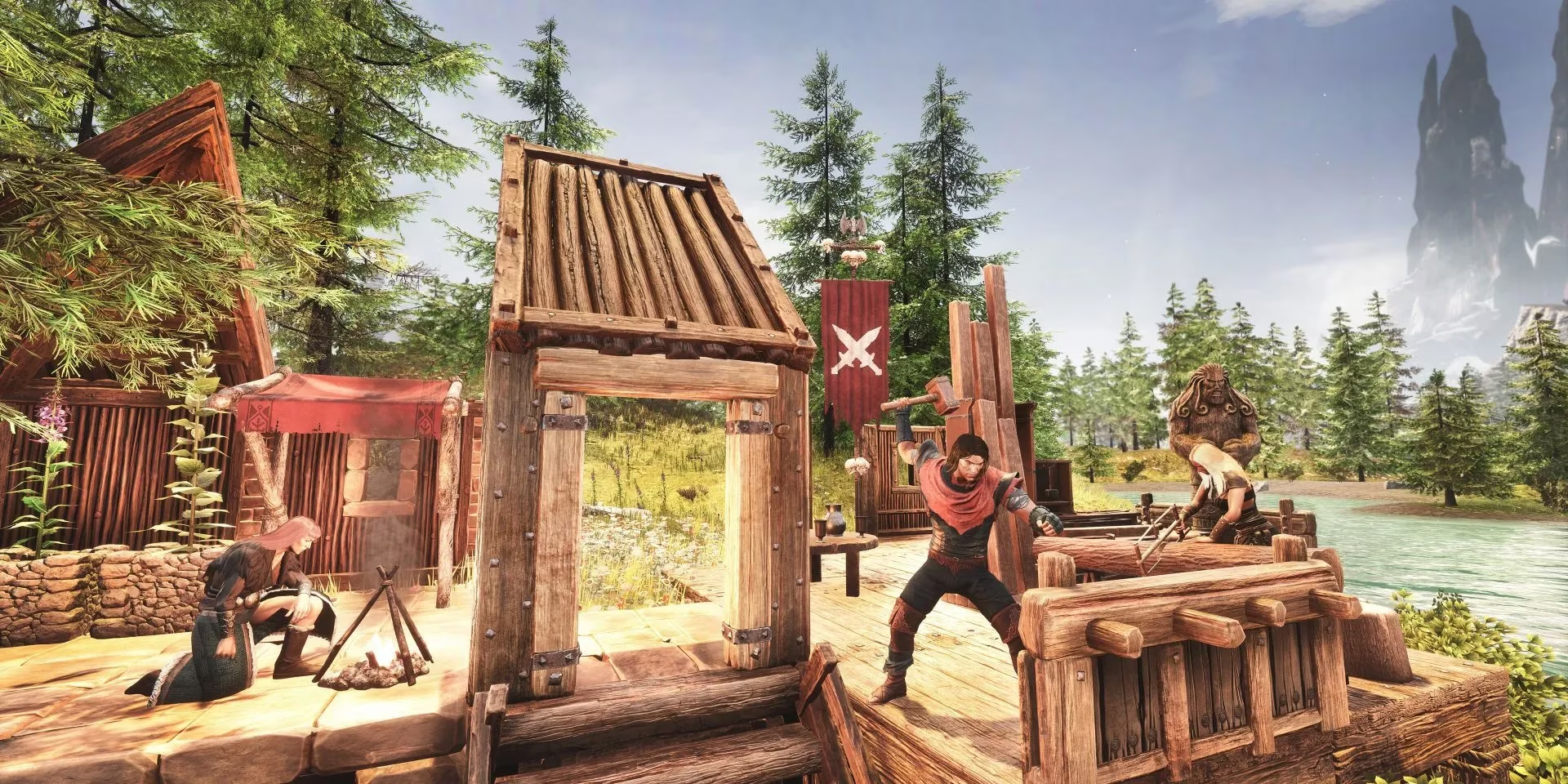
Conan Exiles: Blood, Sacrifice, and Sorcery
When Conan Exiles introduced its magic system in the 2022 Age of Sorcery update, it felt like a natural evolution. But this is no bookish wizardry. Aspiring mages must embark on a quest into a sorcerer's lair and, eventually, get their hands dirty. Advanced spells demand human flesh, blood, and skulls. The game asks: how far are you willing to go for power? That grim question fits perfectly into a world of brutal survival, and in 2026 players are still uncovering new dark rituals.
Outward: A Realistic Approach to the Arcane
Outward famously aims for realism—cold can kill, and every step is deliberate. Its magic system mirrors that philosophy. Flashy fireballs are rare; instead, players learn basic spells and then combine them with Sigils placed on the ground. Standing inside a glyph transforms a simple spark into a devastating blast. Rune magic and chakram combat add further layers. The result is a system that rewards preparation and cleverness. Ask any Outward veteran: isn't the slow, methodical build-up to a perfectly unleashed spell far more thrilling than just mashing a hotkey?
Nightingale: Crafting with the Fae
Inflexion Games' Nightingale arrived in early access in 2024 and has since blossomed into a fully realized world of gaslamp fantasy. Magic here isn't a personal talent; it's a force you harness through tools and weapons. You apply spells to items, which means every character has an incentive to dabble in magic, but pure mages must work harder. The integration of magic with the Realm Card system creates endless variety. By 2026, the game's community has embraced this flexible approach, proving that survival and sorcery can be seamless partners.
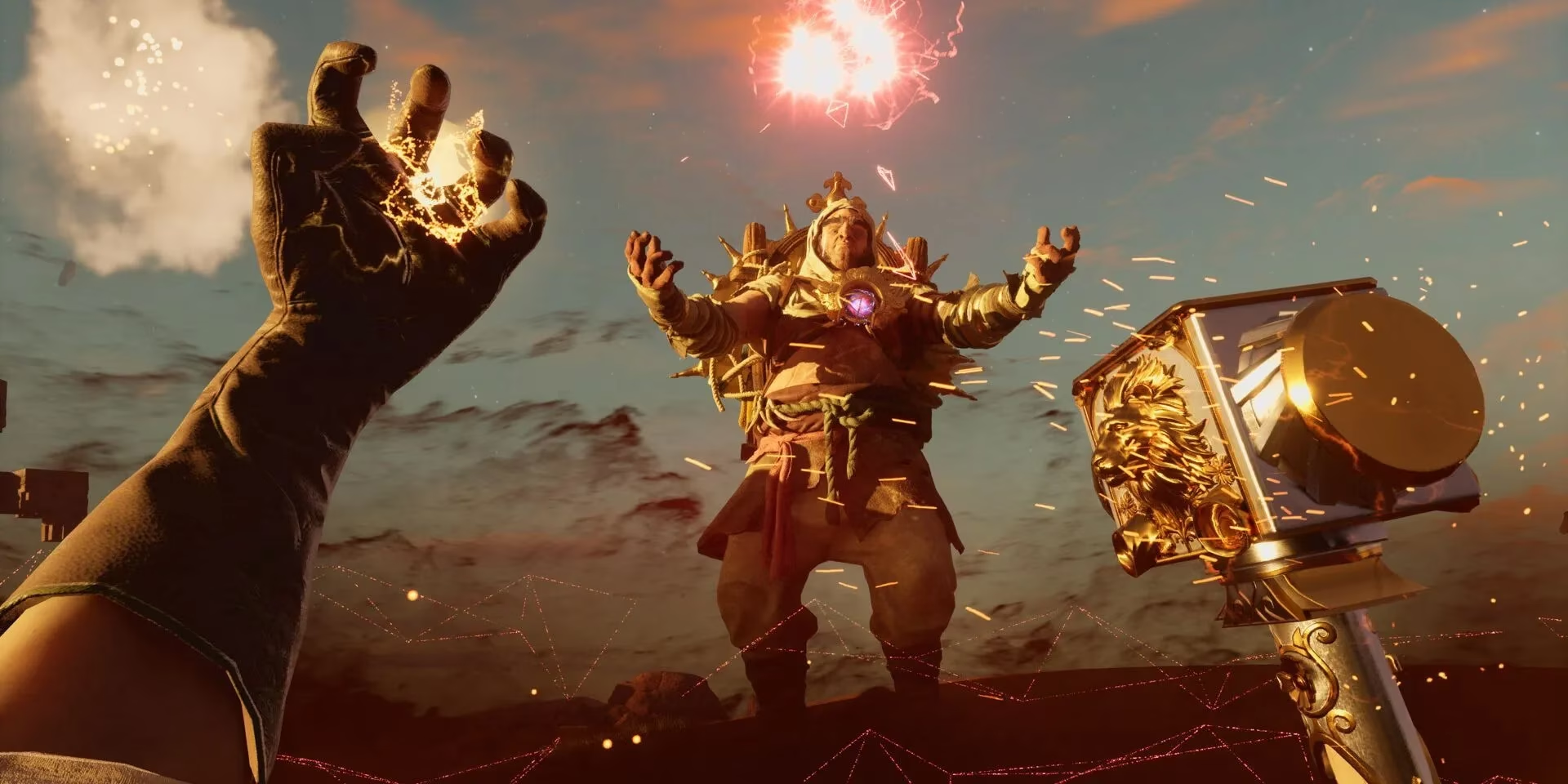
The Future Is Enchanted
With the success of these titles, the question is no longer "Can magic work in survival games?" but "What will developers do next?" We're already seeing rumors of a AAA survival title built entirely around monastic spellcasting, and indie studios are weaving necromancy into farming sims. The possibilities are as vast as they are exciting. Could the next big hit be a survival game where you learn spells by studying the ecosystem, or where your magical experiments pollute the land you depend on? The genre has opened a door, and it's clear that players are eager to walk through.
If the past few years have shown anything, it's that magic doesn't undermine survival—it enhances it. By turning the crafting table into an alchemist's bench and the lonely cave into a wizard's tower, developers are giving us worlds that feel richer, stranger, and more rewarding. And isn't that what survival gaming is all about: finding wonder in the struggle?
Comments