Back in mid-2024, when Minecraft’s 1.21 update rolled out, no one expected a single weapon to upend years of sword-and-bow routine. The mace arrived like a thunderbolt wrapped in a blocky package, turning the game’s comfortable combat hierarchy into a chaotic experiment where gravity became your greatest ally. It was not just a new tool; it was a statement that Mojang was finally ready to reshape how players clashed with creepers, skeletons, and the Ender Dragon.
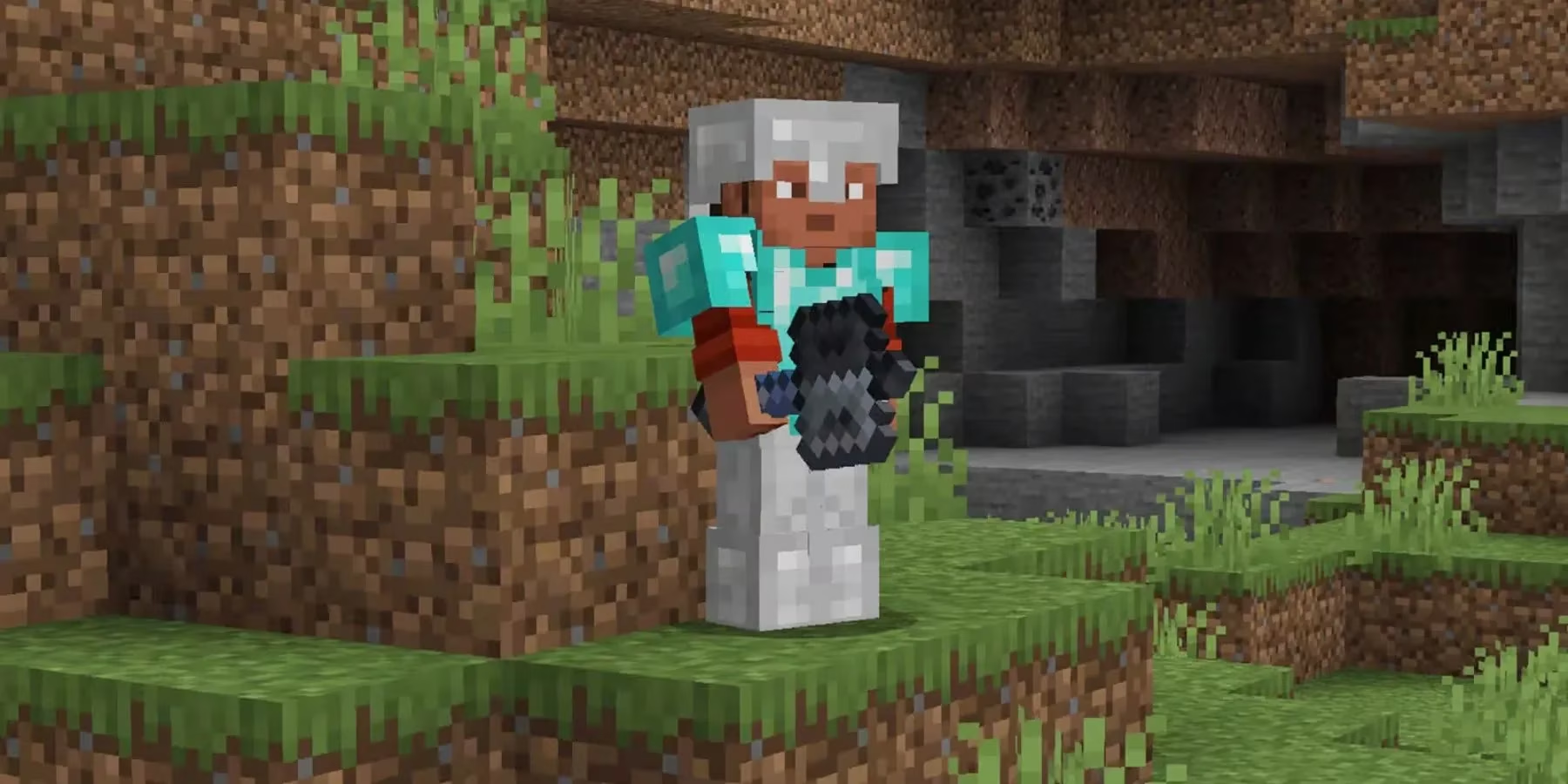
From the very first snapshot, testers realized the mace wasn’t just another niche weapon. Its core mechanic—translating fall height into astronomical damage—felt like catching a falling star and slamming it into a zombie’s skull. The higher a player plummeted, the more devastating the impact, turning every cliff, tower, or even a well-timed elytra drop into a potential one-shot wonder. This was a weapon that rewarded spatial awareness and daredevil positioning with the kind of blunt force that made enchanted netherite swords blush. If Minecraft’s old combat was a polite fencing duel, the mace was a mosh pit where the floor suddenly disappeared.
The weapon’s enchantments only amplified its rebellious spirit. Wind Burst launched airborne attackers even higher, creating a self-sustaining loop of aerial carnage. Breach shredded through armor like wet paper, making the heavily clad piglin brutes rethink their life choices. Density gave each downward blow the crushing weight of a small mountain, as if the mace itself was condensing the entire Overworld’s gravity into its head. Another apt metaphor: wielding a fully tricked-out mace felt less like fighting and more like conducting an orchestra of kinetic energy, where every note was a defeated mob’s death rattle.
Naturally, players began questioning whether the mace had shattered the game’s balance. The community erupted in forums and snapshot feedback threads, with many calling it absurdly overpowered. Why craft a trident when you could leap from a Bastion Remnant rampart and delete a Wither in three swings? The sword, loyal companion for over a decade, suddenly seemed like a toothpick. Yet Mojang hadn’t simply added a power creep item; they had opened a Pandora’s box of combat design possibilities. The real question was whether they would learn from this lightning-in-a-bottle experiment and expand the arsenal further.
Fast forward to 2026, and it’s clear the developers listened. The mace didn’t remain a solitary outlier; it became the catalyst for a whole new generation of inventive weaponry. The Spear, introduced in the 2025 “Tactician’s Tome” update, answers the mace’s vertical dominance with horizontal crowd control. It boasts extended reach and a sweeping arc that can knock back multiple foes at once—perfect for fighting off a horde in a tight ravine. Players often describe it as the “mace’s polite older sibling,” trading reckless airtime for disciplined formation-breaking.
Then came the Sling, a scrappy ranged option that finally gave waste blocks a second life. Cobblestone, dirt, gravel—all become ammunition. While damage per pellet is modest, the sling’s knockback rivals a fully charged bow, and its rapid fire rate lets you turn a stack of useless granite into a zoning nightmare. It’s the combat equivalent of spilling a bag of marbles in front of an advancing Iron Golem: chaotic, cheap, and deeply satisfying. In tandem with the mace, slings encourage terrain manipulation and guerilla tactics that the old bow-arrow economy never could.
Perhaps most surprising was the Twin Claws, a dual-wield melee set from early 2026’s “Echoing Depths” expansion. They sacrifice block-breaking ability and raw damage for a frenzied attack speed that stacks a bleeding effect. With the claws, you don’t need fall height; you just need to stay in an enemy’s face long enough to turn their health bar into confetti. This was the missing piece that made combat flavor match player temperament—aggressive rushers no longer had to begrudgingly craft a sword.
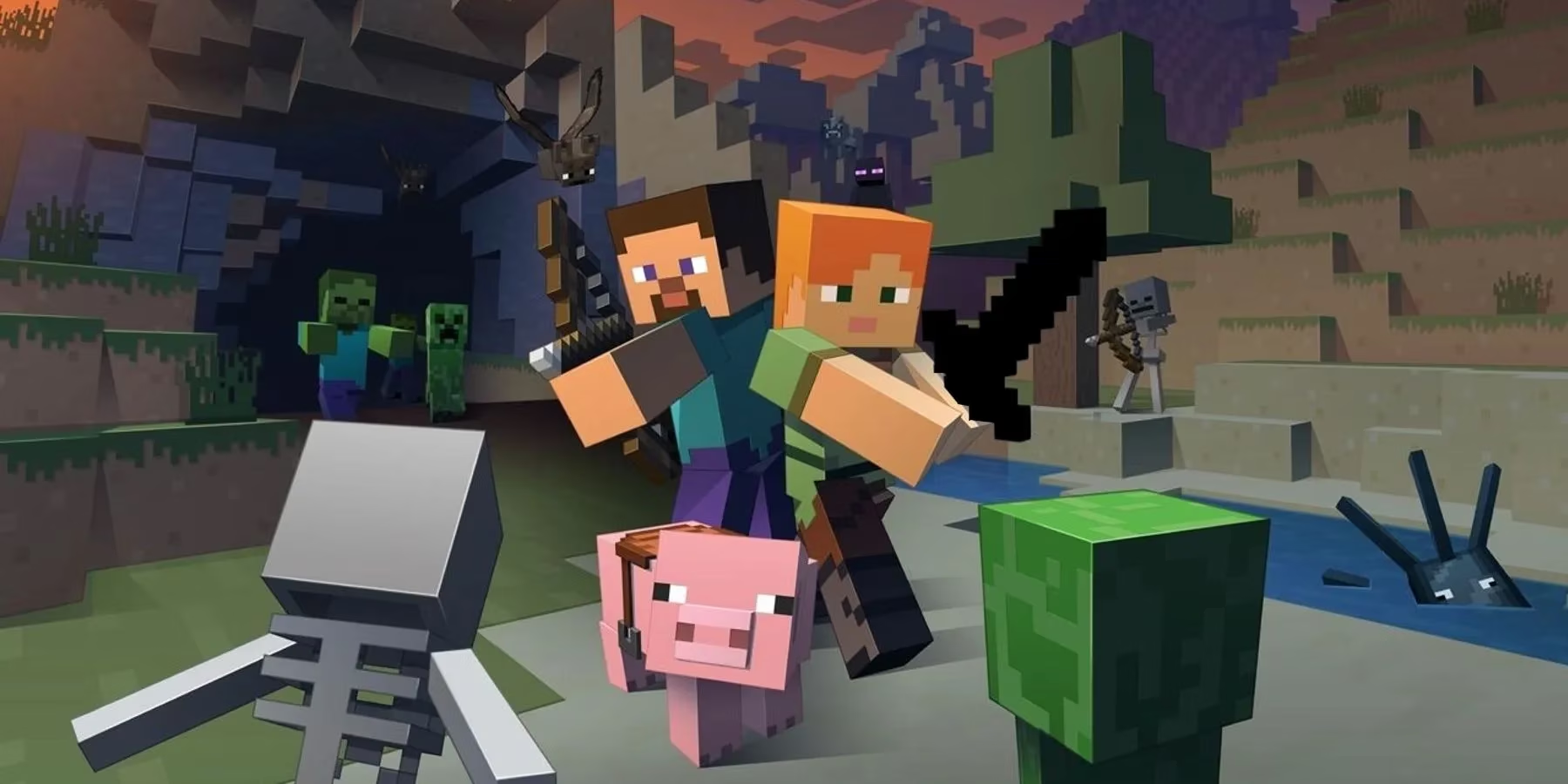
These additions didn’t just balance the mace’s might; they transformed Minecraft’s combat into a rich ecosystem. Now a player’s loadout feels like a personal manifesto. Do you carry a mace and sling, playing a gravity-warping skirmisher who bombs down from cliffs then pelts survivors with rubble? Or do you combine a spear and twin claws for a defensive stance that can pivot into bloody fury? Even the humble sword received a rebalance: its sweeping edge enchantment now scales with maximum health, making it a reliable, all-purpose choice that never falls far behind these flashier newcomers.
Looking back, the mace was the shock to the system minecraft needed—a stray spark that lit a powder keg of innovation. It taught Mojang that players craved weapons with personality, mechanics that invited improvisation rather than stat-checking. The game no longer just asks “diamond or netherite?” It asks “how do you want to rewrite the sky?” And as we explore the fresh cave biomes and skulk-choked deep dark cities of 2026, it’s thrilling to wonder what weapon will next fall from the developers’ creative heights—perhaps a boomerang that curses enemies, or a deployable shield that creates temporary terrain. If the mace was the first drop in a waterfall of fresh ideas, we’re all standing under it with buckets ready.
Comments