Have you ever wondered why some games feel completely new every time you press start, even after hundreds of hours? The secret sauce is procedural generation—algorithms that dynamically craft worlds, levels, and encounters, ensuring no two playthroughs are ever the same. In 2026, developers are pushing this technology further than ever, giving rise to titles that redefine replayability. Whether you crave tense survival, frantic combat, or a galaxy of endless discovery, there’s a procedurally generated gem out there with your name on it. Let’s dive into a handpicked collection of games that keep players guessing, adapting, and coming back for more.
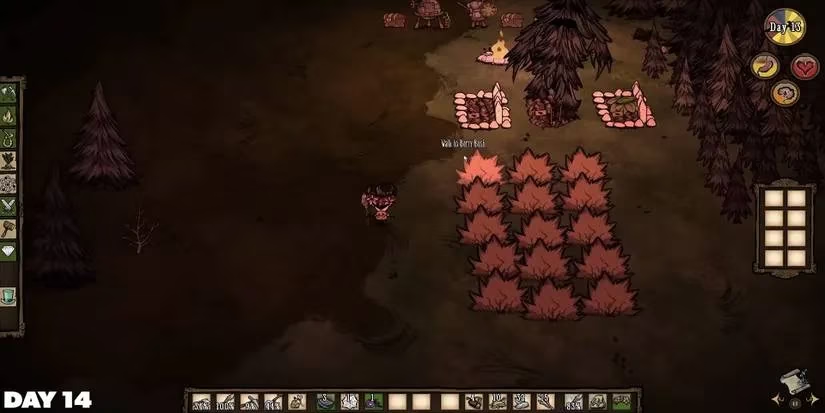
Don’t Starve – Mastering a World Built by Madness
Imagine being dropped into a dark, hand-drawn wilderness where the very ground under your feet can become a deadly marsh or a spider-infested forest overnight. That’s the reality of Don’t Starve. This survival gem uses noise functions and clever algorithms to generate biomes, resources, and threats each time you open a new world. One day you’re farming carrots in a gentle meadow; the next, you’re fleeing from hounds in a scorching desert. The game doesn’t just ask you to survive—it demands that you rethink your entire strategy on the fly. With unique character unlocks and a variety of game modes, the question becomes not “if” you’ll die, but “how will this world kill me today?”
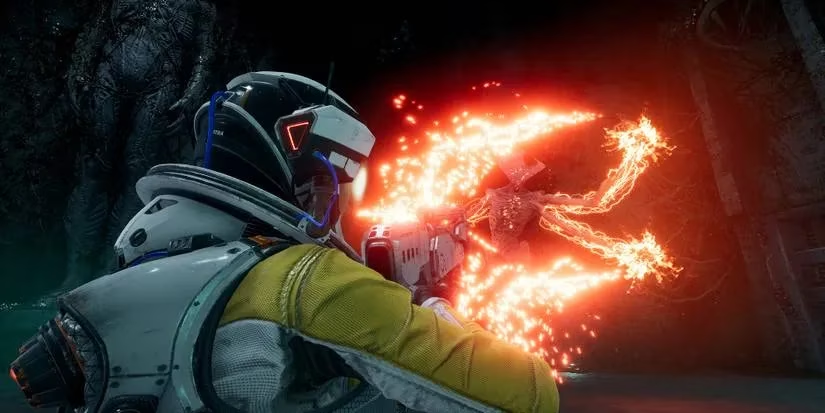
Returnal – Death Is Only a Reset
What if every time you fell in battle, the planet itself shifted around you? Returnal answers that thrilling question with a fusion of roguelike tension and bullet-hell third-person shooting. The procedural generation here doesn’t rebuild entire rooms; instead, it remixes enemy placements and the order of areas, making each loop feel fresh yet disturbingly familiar. Selene’s journey is as much about uncovering a haunting narrative as it is about survival—three distinct endings encourage repeated runs, while atmospheric storytelling keeps you glued to the mystery. Can you adapt quickly enough to break the cycle?
Lethal Company – Abandoned Moons, Fresh Nightmares
Grab a few friends and step into the space-age salvage horror of Lethal Company. Each abandoned moon you land on is pieced together by procedural generation, so no scrapyard dig ever feels safe or predictable. Deadly traps, lurking horrors, and precious loot all change places, forcing your team to communicate and improvise under extreme pressure. The genius here lies in the atmospheric design—even though the layouts are random, the game’s eerie soundscapes and grim visuals inject every corridor with a distinct, inescapable dread. How long can your crew last before greed—or panic—wins out?

Valheim – Viking Survival, Forged Anew
Why settle for a static open world when you can sail through a realm sculpted by algorithms and Norse mythology? Valheim drops players into the afterlife and tasks them with building, crafting, and conquering procedurally generated biomes. One map might treat you to gentle meadows and sprawling Black Forests, while another greets you with a deadly swamp right outside your first hut. The game focuses on a single epic playthrough, encouraging deep character progression and massive base construction, but the organic diversity of the landscape ensures your Viking saga will be entirely your own.
Nightingale – Victorian Fantasy Meets Unpredictable Realms
Step through a portal into a realm that no other player will ever see quite the same way. Nightingale blends Victorian-era aesthetics with survival and crafting, sending you through interconnected fantastical worlds filled with elusive resources and magical creatures. Because each realm is procedurally generated, your journey to craft powerful gear and face towering bosses becomes a deeply personal adventure. The game rewards long-term progression, making every discovery feel earned and every fantastical twist feel like it was made just for you.

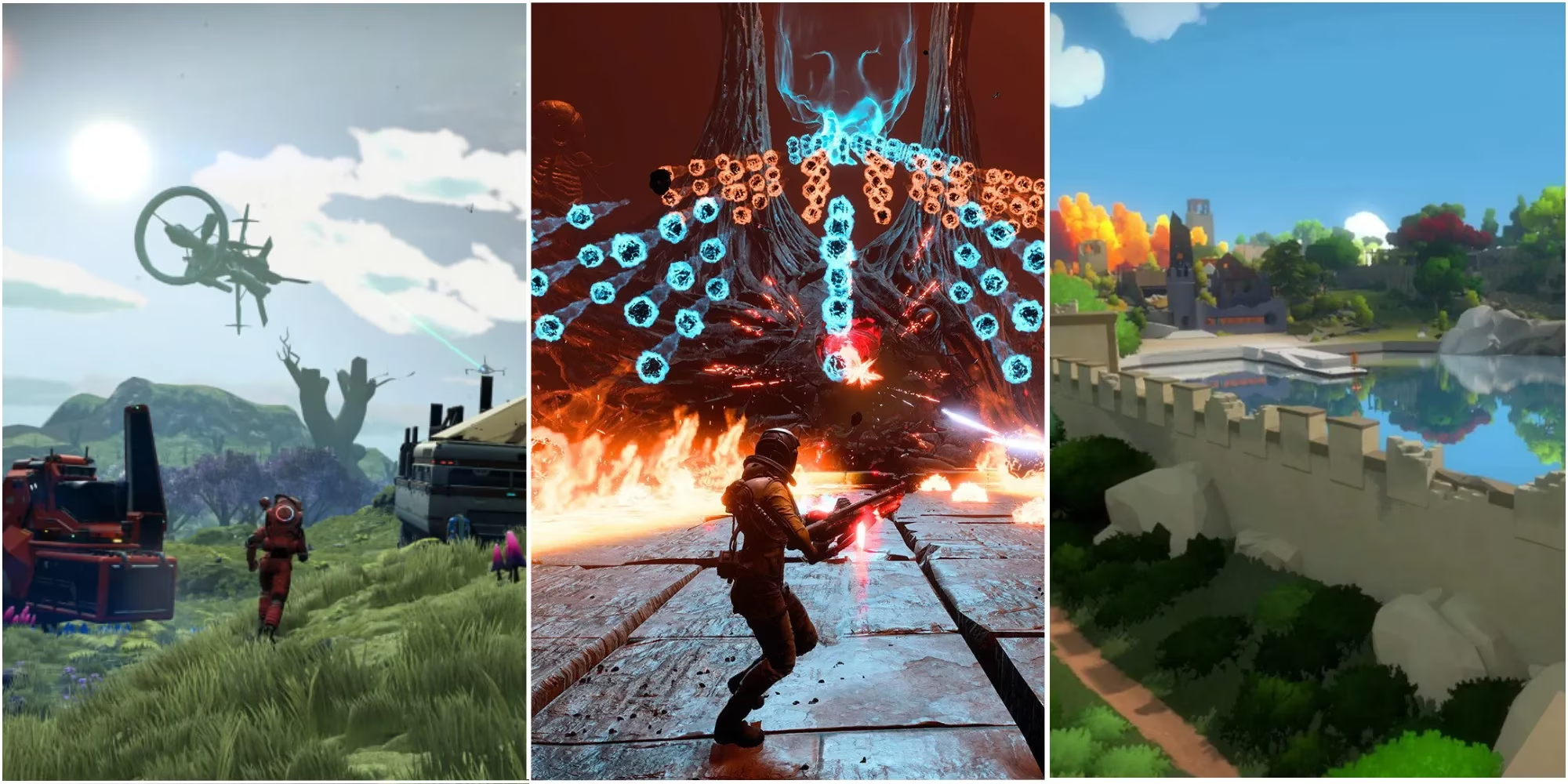
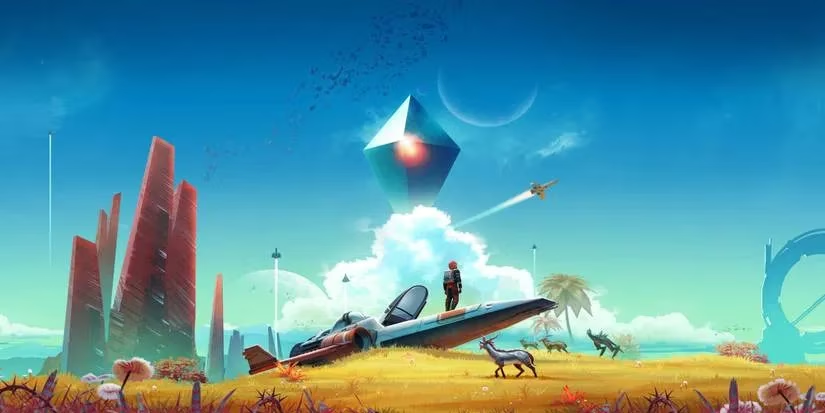
No Man’s Sky – An Infinite Canvas of Stars
What if you could explore an entire universe created by math and imagination? No Man’s Sky builds an almost limitless galaxy where every star, planet, and creature is the child of procedural algorithms. You might land on a balmy paradise full of docile fauna or touch down on a radioactive wasteland with six-legged predators. With years of content updates consistently enriching the experience, the game has evolved into an ever-expanding playground. Build a base on your favorite world, trade with fellow travelers, or simply warp into the unknown—the universe will always have a new surprise waiting.
Deep Rock Galactic – Caverns of Chaos and Cooperation
Who would have thought that being a space dwarf could be this thrilling—and this unpredictable? In Deep Rock Galactic, each mining mission plunges you and up to three friends into a procedurally generated underground labyrinth. Alien swarms, hazardous terrain, and priceless minerals all shuffle their positions, so teamwork becomes the ultimate weapon. The game’s robust progression system, weapon unlocks, and modding support make every dive back into the mines feel like a brand new operation. Can your squad work together under fire, or will you all be lost in the dark?
Hades – Dying Has Never Been This Rewarding
Escaping the Underworld isn’t just about combat prowess—it’s about embracing the chaos of procedurally generated chambers. Hades intermixes randomized rooms, enemy patterns, and divine boons so that each run becomes a unique puzzle to solve. Even better, death advances the superb narrative, rewarding you with fresh character dialogue and world-building revelations every time you fall. The ability to activate Pacts and tailor difficulty ensures that you can always chase that perfect, ever-changing escape. Does the Prince of the Underworld have what it takes to see the surface again?
Enter the Gungeon – Bullet Hell That Dances to Its Own Beat
Take a dungeon crawler, fill it with guns that shoot tacos, bees, and black holes, then randomize every corridor and boss fight. That’s Enter the Gungeon for you—a 2D roguelike that keeps your trigger finger guessing. The game’s procedural layout means no two attempts are alike, and the sheer variety of weapons and power-ups transforms every run into a celebration of chaos. With new characters and secrets to unlock, each dive into the Gungeon feels like a fresh descent into beautiful, bullet-riddled madness.
Spelunky – Platforming Perils That Never Grow Stale
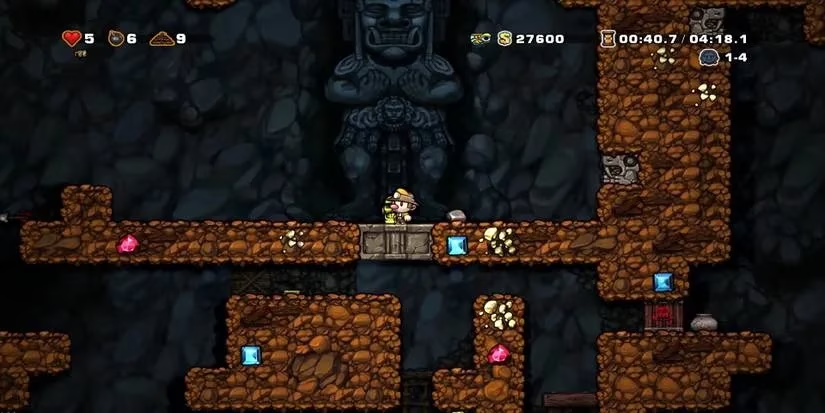
How many times can you plunge into treacherous caverns before you finally master them? Spelunky dares you to find out. This iconic roguelike platformer scrambles level layouts, trap positions, and treasure locations every single attempt, rewarding quick thinking and improvisation above all else. Frustrating spikes and dart traps become memories as you unlock shortcuts and sharpen your skills, but the game never lets you feel truly safe. It’s a brutal teacher, but one that turns every successful run into a triumphant story of patience and daring.
These ten titles prove that procedural generation is far more than a technical gimmick—it’s a design philosophy that breathes infinite life into gaming. Each world, cave, or galaxy is a conversation between the developer’s vision and an ever-responsive algorithm, and the result is an experience that belongs solely to the player. So, which unpredictable adventure will you jump into next?
This discussion is informed by reporting from Polygon, and it helps frame why procedural generation isn’t just “random levels,” but a replayability engine that changes how players learn and adapt. In games like Hades, Spelunky, and Enter the Gungeon, the shifting room layouts and loot rolls turn each run into a new set of decisions, while larger-scale world generation in No Man’s Sky and Valheim makes exploration feel personally authored by your route, risks, and discoveries rather than a fixed map you memorize.
Comments