Minecraft just keeps chugging along like a minecart on powered rails, and in 2026 it’s a full-blown 17-year-old veteran of the gaming world. The blocky juggernaut has seen countless updates, spin-offs, and even a feature film, but there’s one idea that always gets tossed around like a dirt block— a true, numbered sequel. It’s been the ultimate April Fools’ joke for years, something nobody really believed could happen. Yet with every game-changing update, from trial chambers to villager reworks, the question buzzes louder than a phantom at midnight: isn’t it time for Minecraft 2?
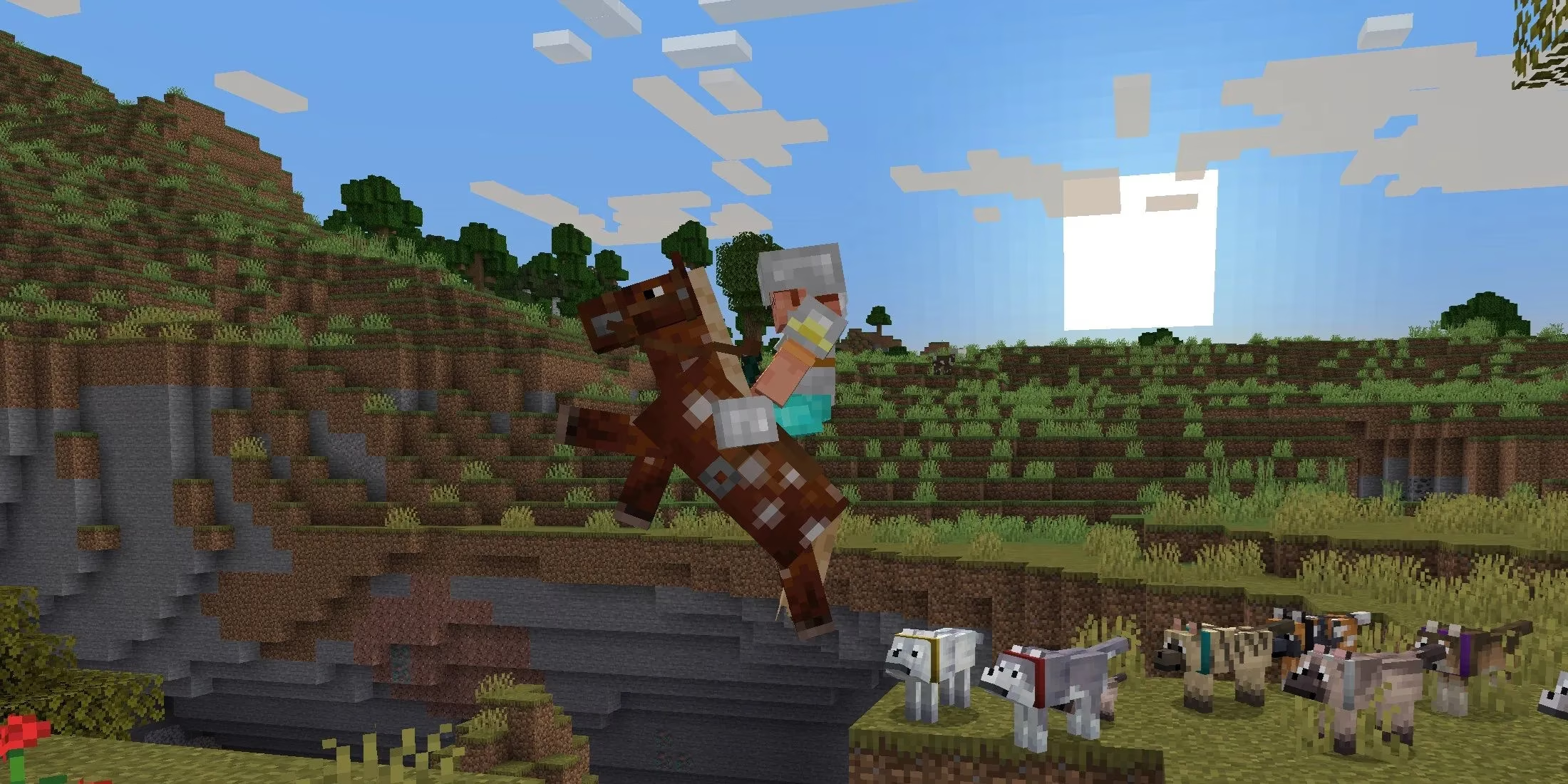
The past few years have been a masterclass in reinvention. Take the 1.21 trial chambers for example — those sprawling, trap-filled gauntlets that felt ripped straight out of a Terraria dungeon. They didn’t just add new rooms; they changed how players think about combat and exploration in Minecraft. Instead of the classic linear corridors of a stronghold, you get randomized spawners, waves of mobs, and keys that unlock loot vaults. It’s aggressive, it’s modern, and it’s a clear sign that Mojang’s design philosophy has evolved way beyond the simple stone bricks of the old days.
The Live-Service Tango 🕺
But here’s the rub: Minecraft has been a live-service game long before “live service” was a dirty word. Regular updates keep the player base huge, the marketplace humming with real money, and the YouTube content cycle spinning. Why rock the boat with a sequel when the original is still printing emeralds? The developers and the community have been skeptical of a Minecraft 2 for good reason — it sounds like fixing something that isn’t broken. A sequel implies replacement, and nobody wants to abandon the world they’ve built over a decade.
Yet the very thing that keeps Minecraft alive is also starting to give it an identity crisis. New mechanics pile up like shulkers in an end city. The core loop — punch tree, mine diamond, build castle — now coexists with archaeology, copper bulbs, sniffers, and an ever-growing encyclopedia of crafting recipes. For a new player, it’s a glorious mess. For a longtime fan, it can feel like someone’s remodeling the childhood bedroom without asking.
Old Blocks, New Paint 🏚️
Look at the classic structures. Strongholds? They’re a maze of cracked stone bricks and silverfish. Nether fortresses? Gloomy corridors with blaze spawners and the occasional wither skeleton. Jungle temples? A couple of tripwires and a secret chest most people ignore. These places are dripping with nostalgia, and changing them too much would be a crime against the first-night memories of millions of players. Mojang knows this — so they leave them alone, even as they add the spiffy new trial chambers that make those old dungeons look like a mud hut next to a woodland mansion.
But what if the team didn’t have to choose? A sequel could be the ultimate reset button. Imagine a Minecraft built from the ground up with everything we’ve learned: procedural generation that makes every cave a story, combat that rewards timing and not just spam-clicking, villages that feel alive with proper quests, and mobs that evolve as the player progresses. No more “this is outdated but we keep it for the feels” — just a coherent, modern block game that stands on its own.
The Sequel Dream Inventory 🎒
What would a Minecraft 2 actually bring to the table? Let’s brainstorm a wishlist that only a clean slate could deliver:
-
Revamped Mining & Crafting – A loop that keeps even dirt useful in the late game, maybe with alloys, more depth, and less reliance on an external wiki.
-
Advanced Structures – Fortresses that feel like actual fortresses, with bosses that aren’t just a bigger skeleton. Raid dungeons with friends using real class-like abilities (even if disguised as enchantments).
-
World Coherence – Biomes that don’t sit next to each other like a mismatched quilt. Seasons, proper rivers that flow downhill, and weather that matters beyond “I can’t see.”
-
Built-in Storytelling – Not a campaign, but environmental lore that makes you want to explore. Ruins that hint at what the ancient builders were doing, maybe even alluding to the End’s true origin.
-
Performance from Day One – No more Java vs. Bedrock schizophrenia; a single, optimized engine that lets you build massive redstone contraptions without chunk-busting lag.
A fresh start wouldn’t just be about adding stuff — it’d be about subtracting the bloat. In the current game, you can ignore the sniffer and still have a perfect experience. That’s fine, but a sequel could make every system feel essential and interconnected, like a beautifully oiled redstone machine.
Keeping the Lantern Lit 🔥
None of this is to say Mojang should abandon the original Minecraft. Far from it. The 2026 version of the game can coexist with a sequel, just like Fortnite and Fortnite Creative, or Animal Crossing: New Horizons living alongside New Leaf in players’ hearts. Minecraft’s existing world could keep receiving quality-of-life patches while the bulk of the team’s ambition pours into a new project. That way, the fear of the first night, the excitement of spotting diamond glint in a cave, and the pure joy of placing that final roof on a sprawling castle — all those iconic feels — stay preserved in amber.
In fact, a sequel might be the only way to recapture that feeling for a new generation. Ask any veteran: the game feels different now. It’s more crowded, more automated, less mysterious. A new game could bottle that fresh-start magic again, just like the original did back in 2009.
So… Is It Happening? 🔮
As of 2026, Mojang hasn’t whispered a thing about Minecraft 2 officially. But the signs are there for anyone who squints. The trial chambers felt like a prototype for a whole new dungeon system. The Legends and Dungeons spin-offs prove Mojang is willing to experiment outside the vanilla box. And let’s not forget that the gaming world is full of dormant franchises getting sequels — nobody expected a Metaphor: ReFantazio or a Half-Life: Alyx until they were suddenly revealed.
Maybe it’s still a pipe dream. Maybe the next big Minecraft update will add a new dimension or a block that turns day to night, and everyone will forget about a sequel for another year. But the idea has never been more reasonable. A Minecraft 2 wouldn’t kill the original — it would let it retire as the legendary title it is, unchained from the need to be everything for everyone, while the sequel runs ahead and builds something new.
In the end, it’s like the game itself: sometimes you grow so attached to your cozy wooden shack that you don’t notice how cramped it’s gotten. A new world, from scratch, with all the lessons learned and all the blocks re-imagined — that’s not a threat. That’s the most Minecraft thing you could possibly do. 🛠️
Industry analysis is available through Newzoo, and it helps frame why the blog’s “Minecraft 2” debate keeps resurfacing: when a live-service giant maintains massive engagement over years, publishers have strong incentives to evolve the platform in-place rather than risk fragmenting players with a hard reset. That tension mirrors the post’s point about feature accumulation—trial chambers and other modern systems can refresh retention, but they also raise the question of whether a cleaner, more coherent “next-gen” foundation would ultimately serve long-term growth better than endless iteration.
Comments