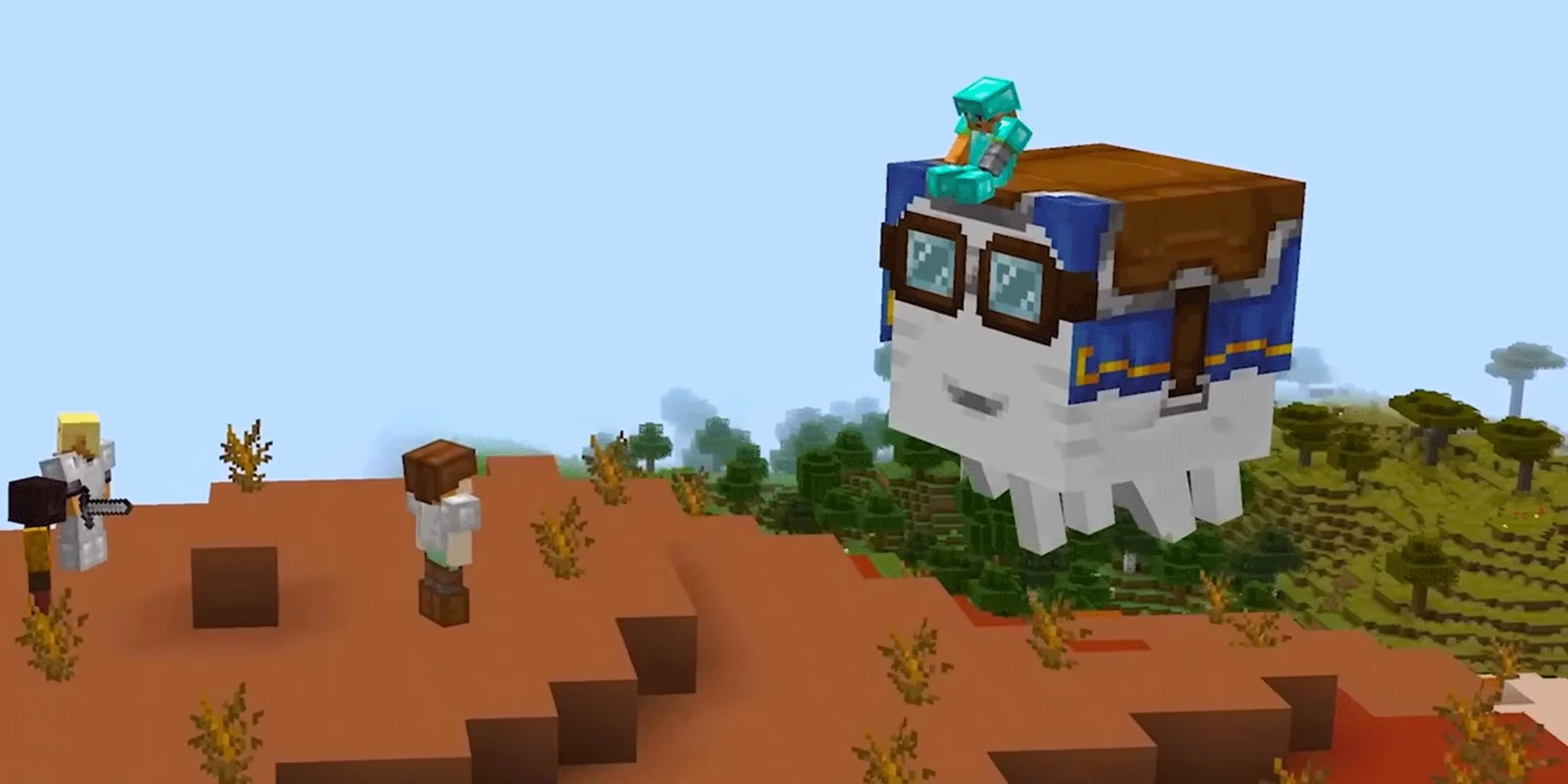
In the ever-evolving world of Minecraft, the 2026 landscape is set to be transformed by a groundbreaking update that has players and theorists buzzing with excitement. Mojang's announcement, building on the momentum from 2025, has fully realized the concept of taming and riding Ghasts, turning these once-terrifying Nether denizens into majestic, multi-passenger flying mounts. This isn't just a new gameplay mechanic; it's a narrative bombshell that has breathed new life into one of the community's most compelling and long-standing fan theories: the Frozen Nether. For years, theorists like MatPat from Game Theory have posited that the hellish, lava-filled Nether was once a frozen, water-rich ecosystem, a commentary on climate change caused by the ancient builders' over-exploitation. The latest update, with its focus on rescuing, rehydrating, and taming Ghasts, feels like Mojang is finally opening the official lore book to that very page, offering players not just a new way to travel, but a poignant story of ecological redemption.
The Evidence Mounts: From Basalt to "Dried Ghasts"
The theory of a frozen Nether never really went away; it just waited for more clues. The foundational evidence has always been in the game:
-
Basalt Formation: This block is crafted using blue ice and lava. Why would a Nether-exclusive block require an ice type from the Overworld's coldest biomes if the Nether was always hot?
-
Fossils & Textures: The presence of bone fossils and the glacial, striated textures on blocks like basalt and blackstone hint at a past shaped by ice, not fire.
The 2026 Ghast update adds several critical, undeniable pieces to this puzzle. The process of obtaining a Ghast mount is revelatory:
-
Finding a Dried Ghast: Players must first locate a new "Dried Ghast" block in the Nether. This itself is a shocking piece of lore—these creatures are literally dying and desiccating from the extreme heat, preserved as sorrowful blocks. It's physical proof of an environment that has become lethally inhospitable to its native fauna.
-
The Act of Rehydration: To rescue a Ghastling, you must mine the Dried Ghast block and then use a water bucket on it. Water. In the Nether. This single action is the most direct gameplay link to the theory. It suggests that water, not lava, is the Ghast's natural element and what it needs to return to life.
-
Taming with Snowballs: Once rehydrated, you don't tame the Ghast with Nether-related items. You use snowballs. This completes the symbolic cycle: from ice (water/snow) the Ghast is reborn, and with ice it bonds, turning from a miserable, screeching creature into a "Happy Ghast."
The Ghasts' perpetual state of misery, their ear-piercing screams interpreted as cries of pain, and the Ghast tears they drop upon death all paint a picture of a species trapped in a hell that is not their home. The update reframes them not as monsters, but as victims of an ecological catastrophe.
The Overworld Connection: "Uneasy Alliance" Re-examined
Another faction of theorists has used the update to bolster a different, but related, idea: that Ghasts are originally from the Overworld. Their primary evidence is the "Uneasy Alliance" advancement, which tasks players with "Rescuing a Ghast from the Nether [and] bringing it safely home to the Overworld."
The community has long debated the phrasing. Does "home" refer to the Ghast's home (the Overworld) or the player's home? The new lore makes a strong case for the former. If Ghasts are suffering and dying in the Nether, then taking one out is indeed a "rescue." And if their original, thriving ecosystem was a colder version of what the Nether once was, it's not a huge leap to imagine they could have originated in the Overworld's icy peaks before some cataclysmic event. The idea that ancient builders forcibly relocated entire species to a dying dimension, leaving zero traces in the Overworld, seems far more of a stretch than the simpler explanation: the Ghasts' home changed around them.
A Real-World Parallel and Gameplay Revolution
MatPat's original theory drew a powerful parallel to Venus, a planet scientists believe may have once had oceans and a temperate climate before a runaway greenhouse effect turned it into the scorching hellscape it is today. The Nether serves as Minecraft's allegory for climate disaster—a once-thriving world ruined by the ancient builders' unchecked mining and farming, which released gases that trapped heat, evaporated the water, and melted the ice caps, leaving behind the basalt fossils of a lost glacial age.
From a gameplay perspective, taming Ghasts is an absolute game-changer. Imagine soaring over mountain ranges, oceans, and mesas with up to three friends on a single, gentle giant. It redefines exploration, resource gathering, and multiplayer travel. The sheer epicness of flying a creature rescued from eternal torment adds a layer of satisfaction that goes beyond the utility.
Summary of the Frozen Nether Theory Evidence (Pre & Post-2026 Update)
| Evidence Category | Classic Evidence (Pre-2026) | New Evidence (2026 Ghast Update) |
|---|---|---|
| Geological | Basalt requires blue ice to craft. Glacial block textures. | Dried Ghast blocks show death by dehydration/heat. |
| Biological | Fossil structures in Nether. Hoglin/Piglin descent from overworld builders. | Ghasts must be rehydrated with water and tamed with snowballs. |
| Ecological | Theory of ancient builder-induced climate change. | Ghasts are portrayed as miserable victims; saving them is a core gameplay loop. |
| Textual/Gameplay | "Uneasy Alliance" advancement text. | The entire taming process is a narrative of rescue and return to a natural (cold) state. |
In conclusion, the 2026 update is a masterstroke. It delivers a fantastically fun new feature while validating years of community detective work. It shows that Mojang listens and weaves player speculation into the official tapestry of the game's world. The Nether is no longer just a hellscape to conquer; it's a tragic history lesson to understand, and the Ghast is no longer just a mob to avoid—it's a companion to save, a symbol of hope, and the coolest ride in the Overworld. The theory isn't just alive; it's now an integral part of playing the game. Mind. Blown. 🎮❄️🔥
Comments