In 2026, the open-world genre has never been louder. Maps glow with icons; quest logs read like to-do lists; algorithms nudge every step. A player can open a dozen blockbuster releases and see every objective glowing like a vending machine. But a quieter tradition refuses to hold anyone's hand. It simply opens a door, whispers 'have fun,' and disappears. That absence is not a bug. It is the entire point.
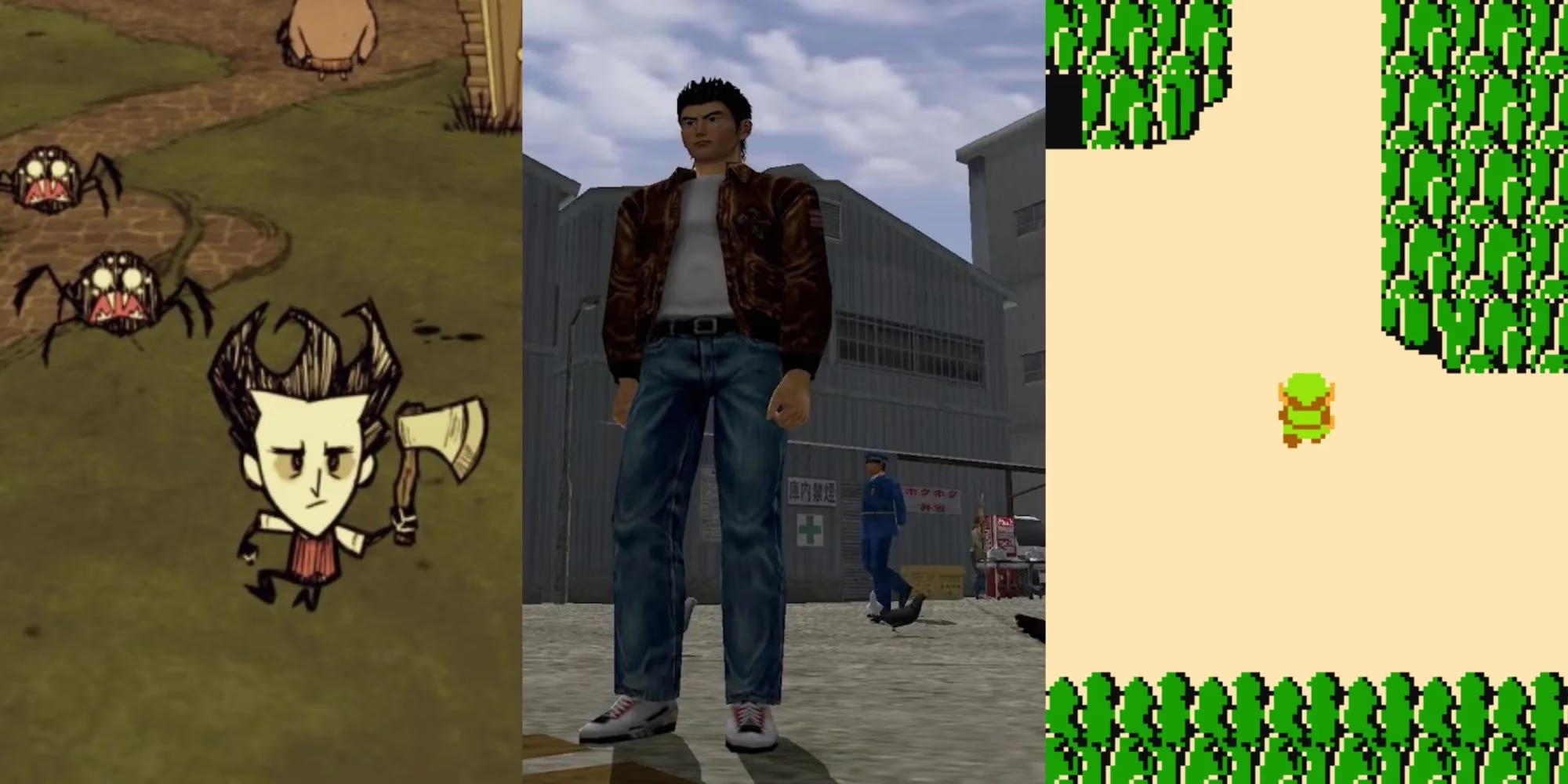
Shenmue: The Streets Remember
Ryo Hazuki does not begin his journey with a glowing arrow above his head. He begins it with a dead father, a small Japanese town, and a debt to settle. Yu Suzuki and Sega AM2 built Yokosuka with arcade-level detail, and then they removed the mini-map. The player has to learn the streets. Street signs matter. Asking strangers for directions matters. Memory matters. In 2026, when so many games treat navigation as a solved problem, Shenmue's insistence on local knowledge feels like a dare. The player does not clear Yokosuka. The player moves through it, slowly, until it becomes familiar.
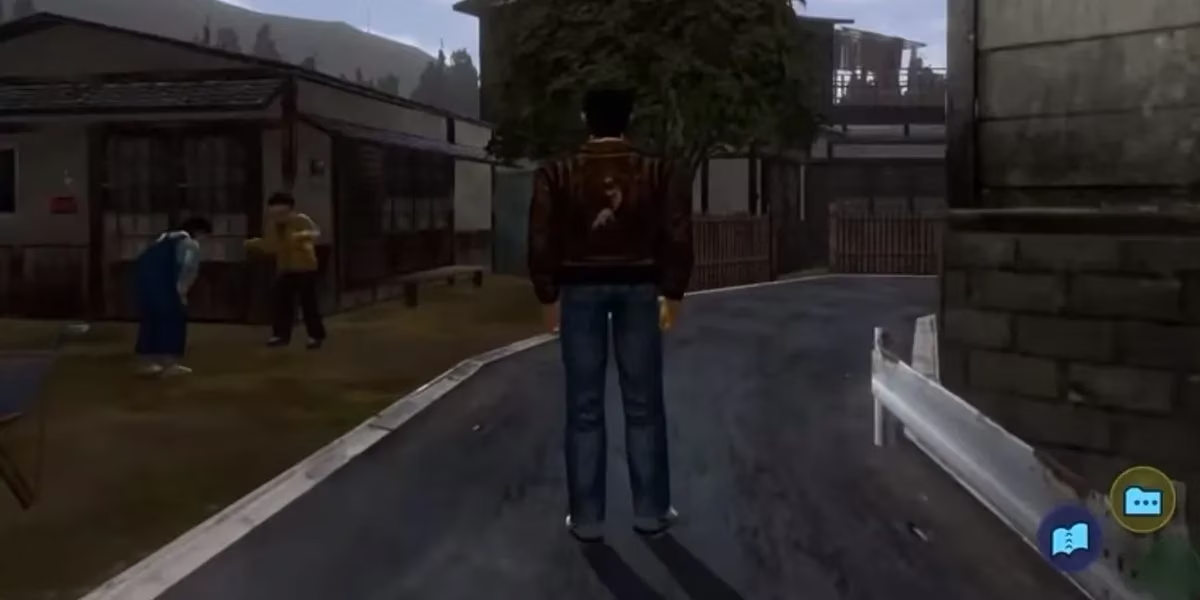
The Elder Scrolls III: Morrowind: A Journal and a Signpost
Morrowind drops the player into a surrealist fantasy landscape as a prisoner with a vague destiny. Then it steps back. There are no quest markers. There is no compass pointing to the next objective. There is a journal, a network of signposts, and NPCs who may or may not know where anything is. The game does not tell the player what to do. It asks the player to forge their own adventure. That freedom can be terrifying, especially for anyone raised on modern convenience. It is also why Morrowind remains a touchstone. The world does not revolve around the player. The player has to revolve around the world.
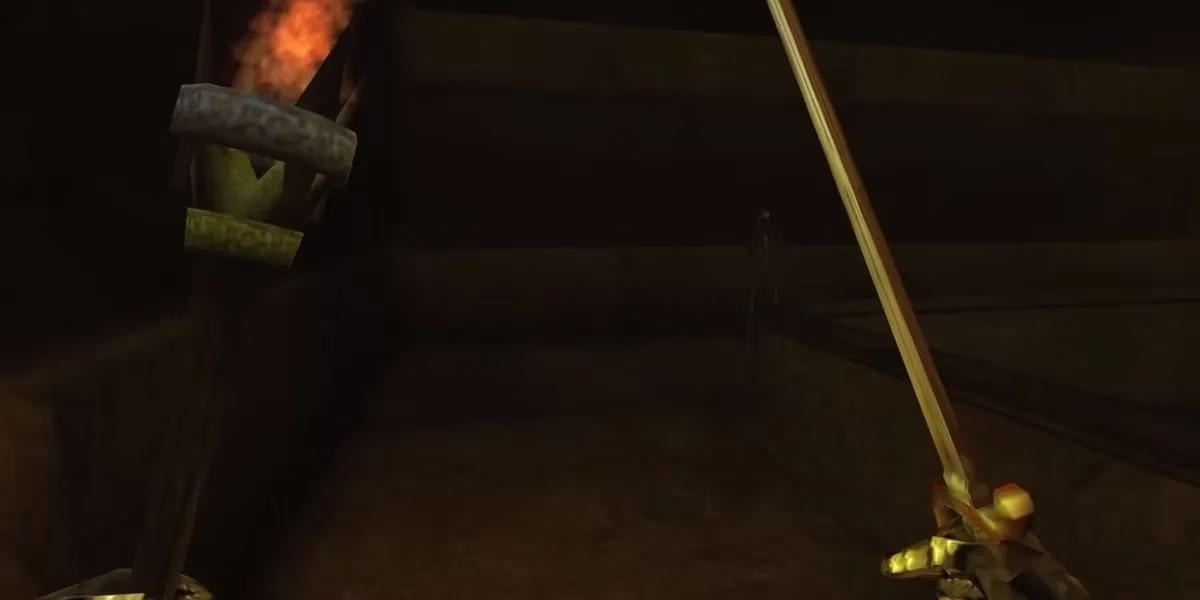
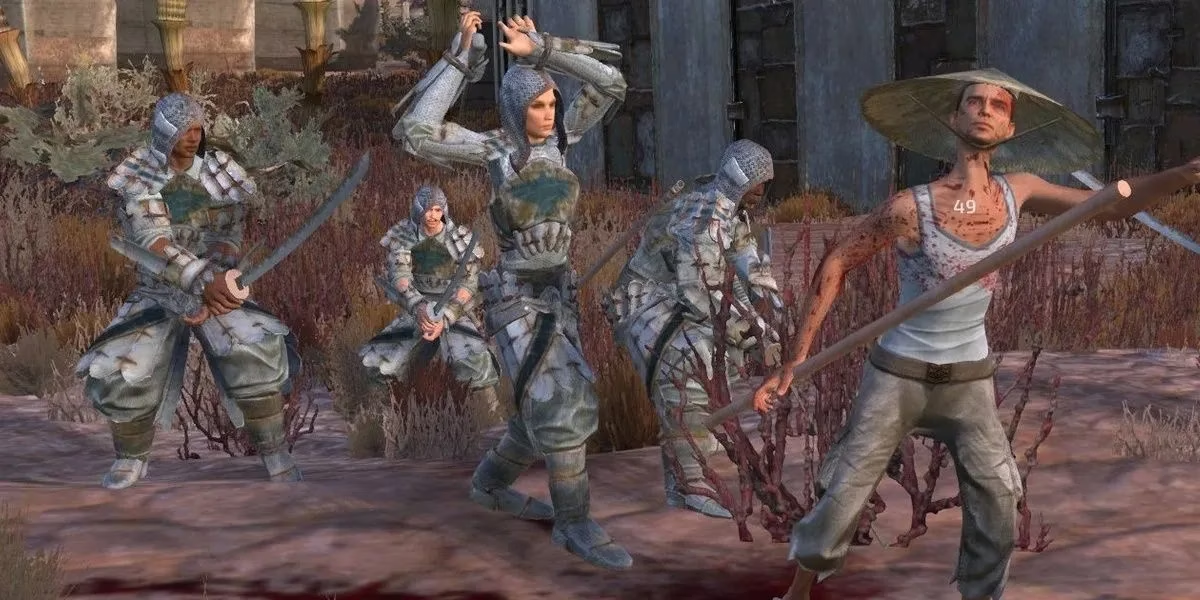
Kenshi: Survival Without a Compass
Kenshi was developed largely by one person, built on the OGRE engine, and set loose in a world that feels like the offspring of Mad Max and Seven Samurai. The player has free rein to do anything, whenever they want. There is no clear objective. There is no sense of direction. What remains is pure survival at all costs. The player can commit atrocities. The player can recruit others. The player can build a settlement or abandon it. The lack of objectives, mixed with so many twisted scenarios, creates an experience that feels altogether unique. In 2026, few games are this willing to let the player become a monster, a hero, or simply a survivor.
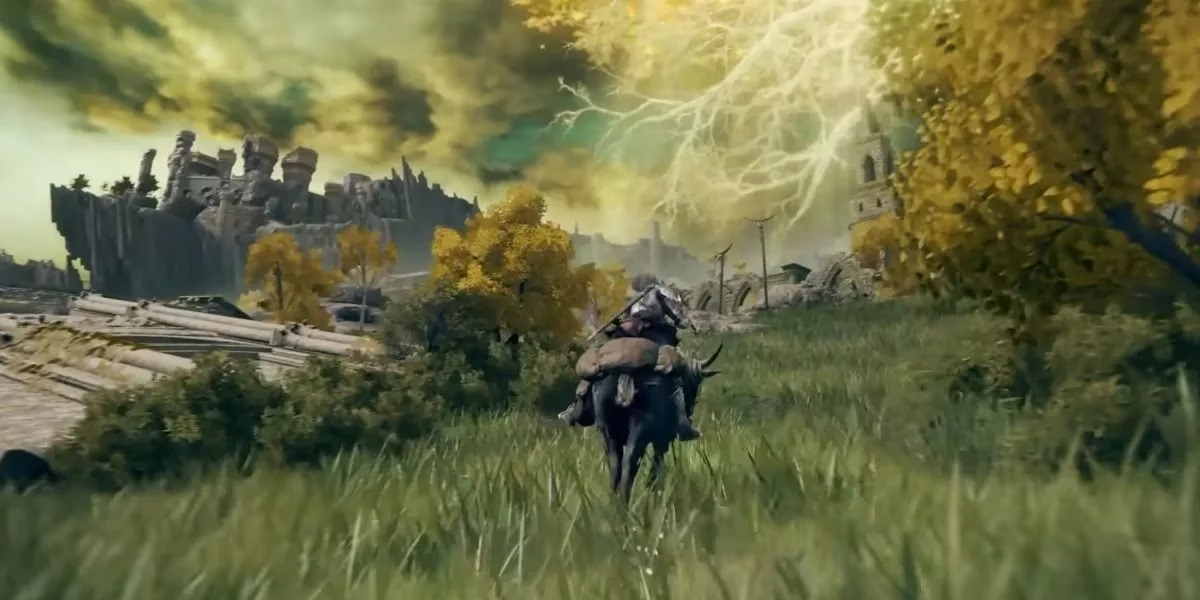
Elden Ring: The Lands Between Do Not Care
FromSoftware's first fully open world was a surprise. The studio had perfected smaller, interconnected worlds in Dark Souls and Bloodborne. Elden Ring took that craft and stretched it across a landscape ripe for exploration. After a brief introduction and sparse bits of story, the player is let loose into the Lands Between with no direction other than to find something to fight or a delicate ruin to examine. The game is populated with bizarre NPCs, but it is content to let players wander in any direction, should they be brave enough. The result is an open world that tempts with a seemingly never-ending horizon. It does not lead. It lures.
Minecraft: A Seed and a Dream
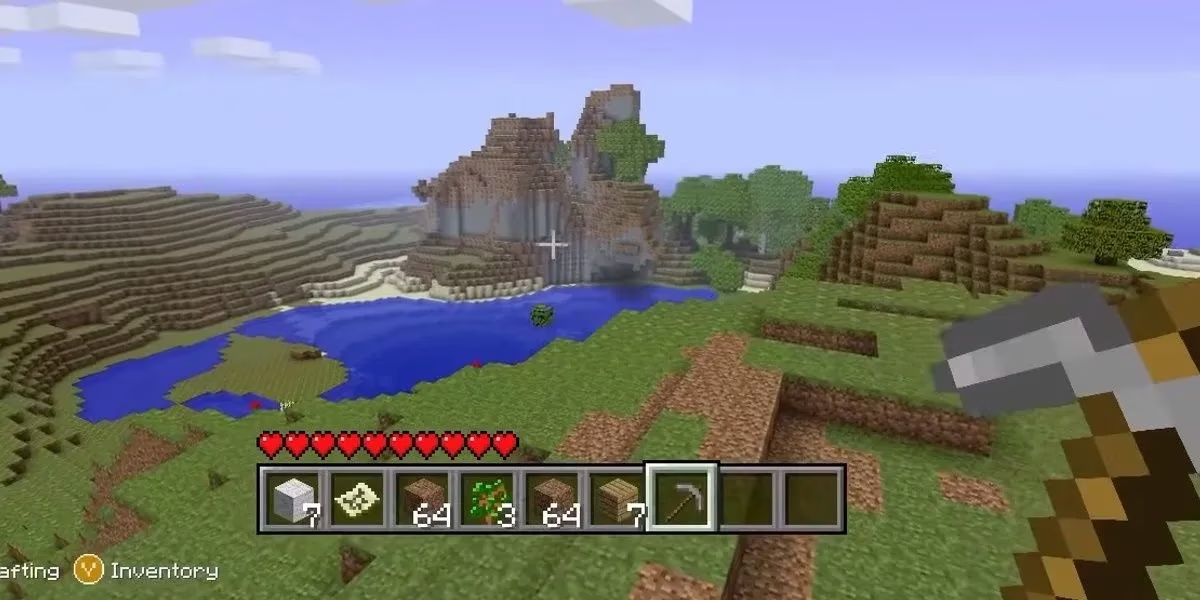
Minecraft did not take long to transcend the video game community. It became one of the most popular properties in the world, and its spectacular sense of freedom is a key reason. The game generates a seed world and lets players go wild. There are absolutely no direction and no objectives. The player must fill out the beautiful world themselves. Crafting tools and weapons supports both building and survival. The player is free to venture to any location they can find without a peep from the game. It is a lovely, charming experience that is still worth playing today. In 2026, its influence is everywhere, but its silence remains its greatest gift.
Don't Starve: The Night Is Coming
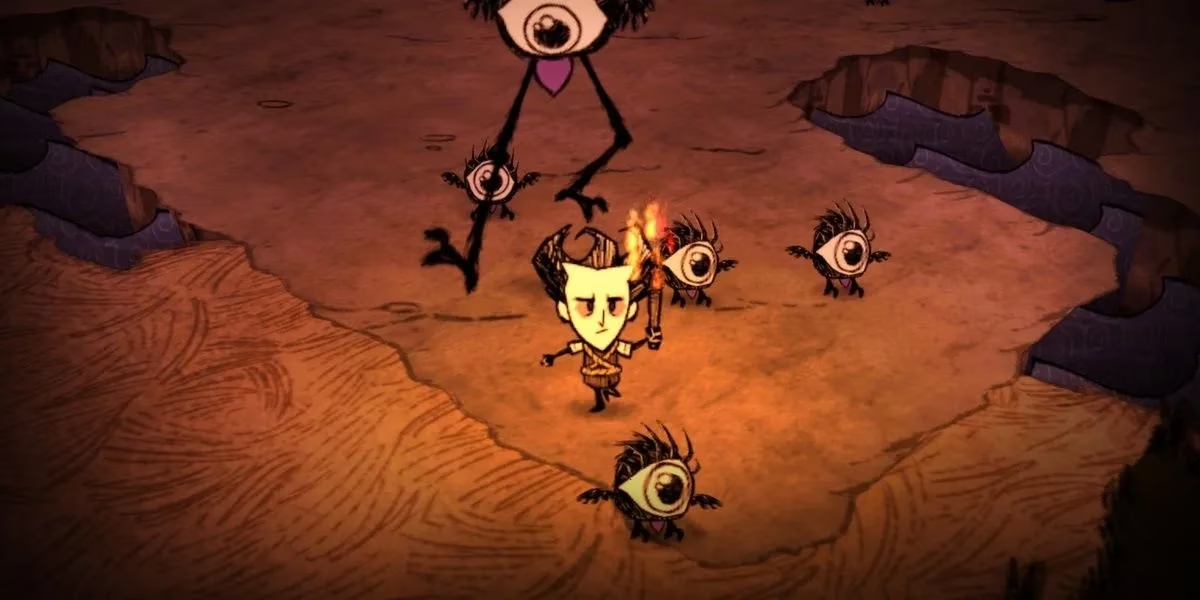
Don't Starve understands that game loops are crucial to creating a feel that players want to return to. It drops players into a harsh, gothic survival world and gives them very little to go on. Permanent death is a real threat. As the player gains knowledge of the day/night cycle, they learn that collecting supplies during the day helps them survive the harsh nights. That loop is what makes Don't Starve worth coming back to. The ambiguous world meshes brilliantly with the intoxicating gameplay hook. The game never explains itself. It simply lets the dark do the talking.
The Legend of Zelda: The First Silence
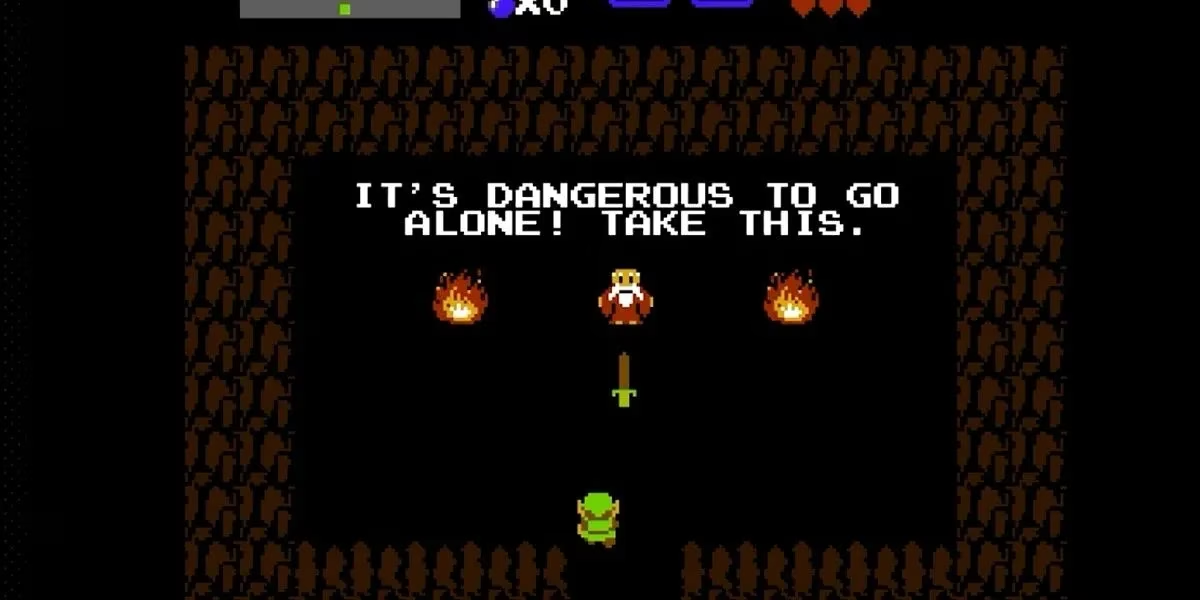
Although Nintendo has recently looked back to the past for inspiration, The Legend of Zelda franchise steered away from the open-ended design structure of the original title in later years. Barring a brief text crawl, the first game offers absolutely zero information about what players are intended to do and how they are to go about it. Link is set off to venture into one of the more dangerous and unpredictable versions of Hyrule, one that feels like it could kill the player at any moment. No matter how deep players get into the game and how many of the nine dungeons they complete, it never quite gives them any sense of what to do. That silence is the seed from which an entire genre grew.
Why the Silence Still Matters
In 2026, open-world games are bigger, denser, and more expensive than ever. They are also more helpful. Quest markers, fast travel, and algorithmic hints have made sure that almost no player gets lost. That convenience is not evil. But the games above prove that there is another way. They trust the player to be curious. They trust the player to be lost. They trust the player to make a story out of a signpost, a journal entry, and a distant light.
| Game | Year | Hand-Holding | What It Asks |
|---|---|---|---|
| Shenmue | 1999 | None | Learn the streets of Yokosuka |
| Morrowind | 2002 | None | Read, ask, and wander |
| Kenshi | 2018 | None | Survive at any cost |
| Elden Ring | 2022 | Very little | Follow curiosity, not markers |
| Minecraft | 2011 | None | Build a world from nothing |
| Don't Starve | 2013 | Very little | Learn the night |
| The Legend of Zelda | 1986 | None | Explore Hyrule alone |
The player who grew up with glowing arrows may find these games frustrating at first. That frustration is a door. Behind it is a feeling that modern blockbusters rarely deliver: the sense that the world is not a checklist, but a place. The player is not a tourist following a guide. The player is an explorer, a survivor, a fool, a hero. The game does not say what happens next. The player does.
So in 2026, if the map feels too crowded, the quest log too loud, and the world too eager to please, it may be time to step backward. Shenmue, Morrowind, Kenshi, Elden Ring, Minecraft, Don't Starve, and the original Zelda are waiting. They will not tell anyone where to go. That is the point. 🧭
The following breakdown is based on reporting from CNET Gaming, which often frames game design through the lens of player experience and modern convenience features. Seen against that backdrop, the “no quest markers” philosophy in worlds like Morrowind, Kenshi, and even Elden Ring reads less like nostalgia and more like a deliberate rejection of UI-first navigation—forcing attention back onto environmental cues, spoken directions, and learned geography so discovery feels earned rather than dispensed.
Comments