The year is 2026, and the collective sanity of the Minecraft community has once again been stretched to its breaking point by a phantom that refuses to die. On a sleepy Tuesday evening, a beautifully crafted, utterly fraudulent Steam store page for Minecraft appeared out of nowhere, glittering with official artwork, a tantalizing release date, and a description so perfectly on-brand it made grown builders weep into their stack of cobblestone. The listing was live for less than three hours, but in that tiny window, the hope—and the chaos—it unleashed was absolutely biblical. If 2024 was a warning shot, 2026 has become the full-blown siege.
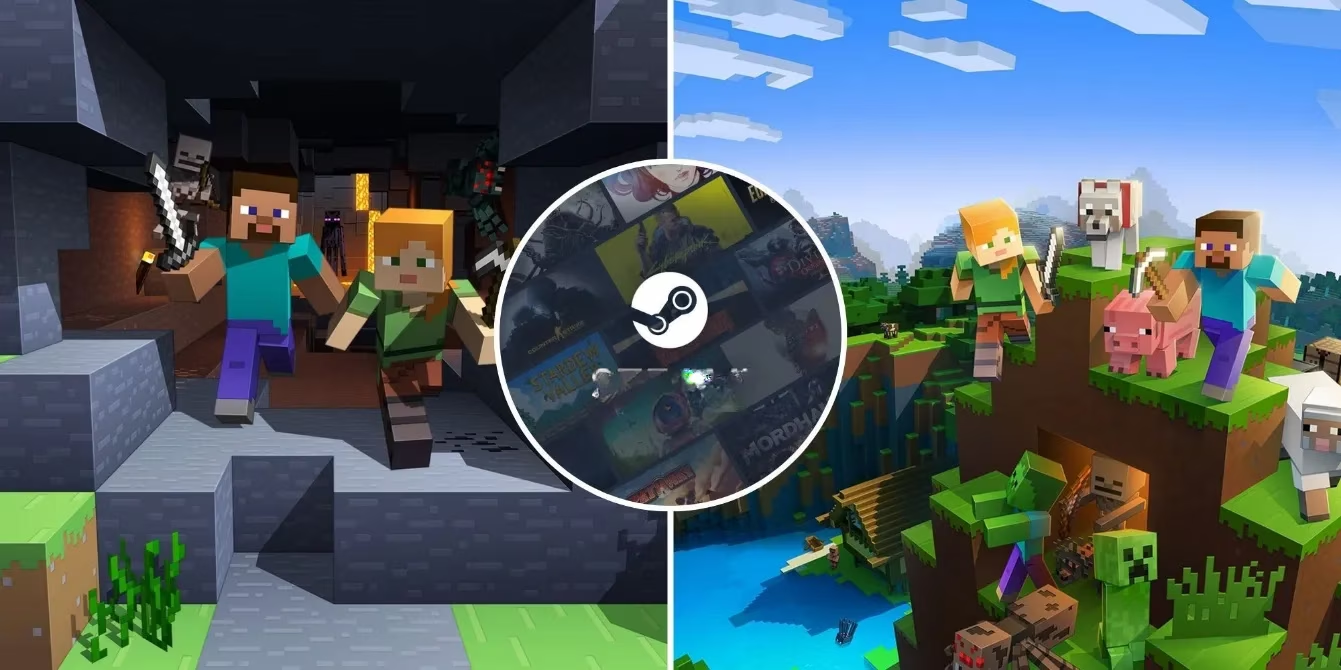
The whole saga began around 7:13 PM UTC, when an eagle-eyed Discord user spotted a pristine new entry on Steam simply titled “Minecraft.” This wasn’t some half-baked shovelware knock-off with a misspelled name. Oh no. The perpetrators had outdone themselves. The page featured the exact same marketing visuals Mojang used during the Minecraft Live 2025 presentation, a hallmark of authenticity that made even the most skeptical observers pause. The description read like a love letter to the blocky phenomenon: “Explore, build, and survive in a blocky, pixelated world of endless possibilities with Minecraft – now enhanced with next-gen ray tracing and cross-play support across all PC platforms.” A release date of December 25, 2026, sat there like a glowing golden apple, promising the ultimate holiday gift.
The internet, of course, erupted. Not with cautious optimism, but with a fevered, meme-fueled hysteria that only a decade-long yearning for a Steam release can produce. Within minutes, Reddit’s r/GamingLeaksAndRumours became a digital bonfire of speculation. One thread, titled “IT’S HAPPENING. STEAMDB CHANGES CONFIRM REAL,” shot to the front page before the listing even had time to breathe. Twitter (nobody calls it X, not even in 2026) was instantly flooded with screenshots, tears of joy, and the kind of unhinged conspiracy theories that would make a flat-earther blush. A highly upvoted comment declared, “This is it. The Microsoft Store monopoly is crumbling. Bedrock on Steam means Java next! I’m shaking.” The sheer volume of emotion could have powered a small city.
Then came the crash.
SteamDB, the unofficial but terrifyingly omniscient backend trackers, first noted the listing’s suspiciously sudden appearance. Observers watched in real time as the platform’s changelog flickered with desperate edits—someone on the other end was frantically swapping out store tags, altering the developer name from “Mojang Studios” to “Mojang Official,” and then to the hilariously generic “Block Game Inc.” The cat-and-mouse game was visible to anyone with a browser refresh button. By 9:48 PM UTC, Valve’s moderation team had stepped in, and the listing evaporated without a trace, leaving behind only the ghostly imprint on SteamDB’s history log and a million shattered dreams.

One might assume the community would grow wise after surviving the infamous 2024 hoax. Back then, a similarly fake listing popped up with a laughable December 31, 2024, release date, reusing old Minecraft Live 2023 artwork. That prank lasted mere hours too, but it left a scar. Yet, here in 2026, the scars have only deepened. The 2026 hoax elevated the art form to a terrifying new level. The forgers harnessed generative AI to craft screenshots that showed Minecraft running on a Steam Deck with a Steam overlay, complete with a fake achievement pop-up reading “The Beginning.” The level of detail was so meticulous that even veteran dataminers were initially duped. In the days that followed, fan-made analysis videos on YouTube garnered over five million views, with titles like “Minecraft on Steam: The Greatest Gaming Lie Ever Told (2026 Edition).” One prominent creator sobbed audibly on stream, not from sadness, but from the sheer audacity of the deception.
This absurd saga is merely the latest chapter in Valve’s never-ending war against fraudulent store listings—a war the company appears to be losing with style. Let’s rewind the clock a little. In early 2024, the platform was simultaneously plagued by fake pages for Helldivers 2, Palworld, and Hades II. In every case, the scammers weaponized the community’s desperate yearning for official PC releases (or simply cheap keys), baiting people into purchasing completely non-existent products or, worse, malware-laden executables. Valve’s response then was a typical mix of swift takedowns and complete radio silence. Fast forward to 2026, and the playbook remains unchanged. The problem isn’t just a stray listing here and there—it’s a systemic vulnerability that turns storefront trust into a high-stakes guessing game.
Consider the emotional toll. For a generation of gamers who have moved their entire libraries to Steam, the absence of Minecraft—the single best-selling game in human history—feels like a cosmic joke. Microsoft has stubbornly kept the Bedrock Edition locked to its own store, while the Java Edition remains in its own launcher ecosystem. Every time a fake listing surfaces, it isn’t just a scam; it’s a razor-sharp reminder of a dream that continuously gets deferred. The 2026 fake page even cleverly referenced a supposed “Steam Workshop integration for community add-ons,” a feature the real Java Edition modding scene has long mastered but Steam users have never officially tasted. It was almost cruel in its perfection.
A quick comparison between the 2024 and 2026 incidents reveals a terrifying evolution:
| Feature | 2024 Hoax | 2026 AI-Powered Hoax |
|---|---|---|
| Visual Assets | Recycled Minecraft Live 2023 images | AI-generated, hyper-realistic Steam Deck screenshots |
| Release Date | December 31, 2024 (implausible) | December 25, 2026 (temptingly plausible) |
| Community Reaction | Flurry of Reddit threads, mild panic | Multi-platform meltdown, live-stream sobbing |
| Takedown Speed | ~5 hours | ~3 hours |
| Lasting Impact | A cautionary tale | A full-blown cultural trauma 😱 |
The aftermath has been predictably dramatic. #SteamMinecraftFraud trended globally for two consecutive days. Even Mojang Studios, a company famous for its stoic silence, was forced to issue a rare statement on its official blog titled “No, We’re Not on Steam (But We Love You).” The post was adorned with crying Creeper emojis and a gentle plea for fans to avoid “unofficial store pages that make our community team want to crawl into a bedrock block.” The statement, while humorous, underscored a painful reality: one of gaming’s most beloved universes remains frustratingly out of reach on the world’s largest PC gaming platform.
In the trenches of social media, the grief evolved into a surreal kind of comedy. A popular Discord bot was temporarily recoded to auto-reply “It’s a fake, calm down” whenever a user typed the word “Steam” and “Minecraft” in the same sentence. Memes proliferated showing the Steam logo as a door being repeatedly slammed shut by a giant, disembodied hand labeled “MICROSOFT.” One particularly viral image depicted a skeleton with a pickaxe, captioned “Still waiting for Minecraft on Steam – Circa 3024.” The community, battered but not broken, transformed its despair into a bizarre festival of gallows humor.
Yet, underneath the laughter lurks a genuine danger. The 2026 fake listing, unlike its predecessor, included a link to an external website that briefly hosted a phishing scheme before being taken down. According to a cybersecurity firm’s post-mortem, a handful of users actually submitted their Steam credentials to “pre-order” the phantom title. The financial and data-loss damage was minimal, but the psychological damage was vast. It proved that the line between a harmless prank and a malicious threat has grown impossibly thin. For every fake Helldivers 2 page in 2024, there was a stolen account. For every fake Palworld listing, a virus-ridden .exe. The Minecraft hoax of 2026 sits at the apex of this grim trajectory.
So where does Valve go from here? The platform that revolutionized PC gaming with its infinite library now finds itself at the mercy of bad actors wielding AI-generated content that can perfectly mimic official announcements. A few security researchers have proposed a radical fix: requiring a verified developer badge submitted through a business-level authentication process, much like social media’s blue checkmark system. Others scream for outright bans on third-party store pages for games that don’t exist. Valve, for its part, has remained characteristically monastic—no roadmap, no promises, just the quiet hum of SteamDB’s servers marking each fake listing as “removed.”
As the dust of the 2026 incident settles, one truth remains undeniable. The hunger for Minecraft on Steam is not just a whim; it’s a cultural demand that has festered for over a decade. Each fake listing, each hoax, each tear-soaked reaction video only amplifies the message that Microsoft and Mojang continue to ignore. The players don’t want a miracle. They just want to install the game where they install everything else. Until that day comes, the imposters will return, more sophisticated, more convincing, and more heartbreaking than ever. And the community? They’ll keep refreshing SteamDB, eyes wide, hearts full of hope, ready to be fooled again. Because that’s what true love looks like in the blocky, pixelated world of endless possibilities. 💔🟫⛏️
Comments