In the endlessly churning universe of Minecraft, where blocky mountains and sprawling redstone contraptions are born daily, a particular construction continues to haunt the community’s collective imagination well into 2026. Even two years after its unveiling, the monumental Oil Rig rebuilt by the player known as ImmenseAlvin69 stands like a sleeping steel leviathan anchored in the pixelated ocean, a testament to what happens when one gamer’s obsession fuses with the sandbox’s infinite canvas. It was a project that blurred the line between two starkly different survival worlds, dragging a brutalist icon from Rust’s radioactive shores straight into Mojang’s gentle biomes, and it refuses to be forgotten.
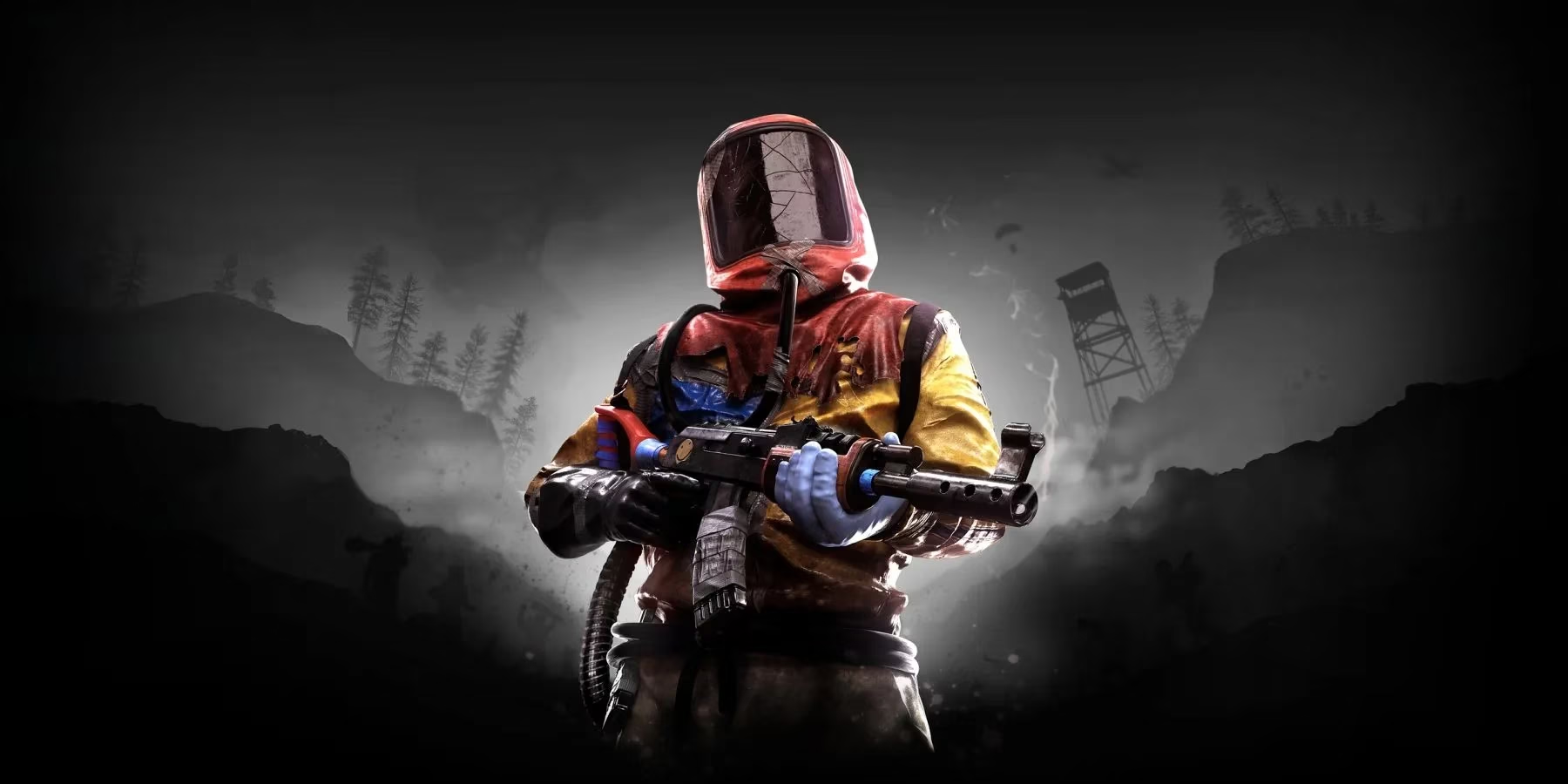
Rust, Facepunch Studios’ merciless survival sim released back in 2013, had always shared an eerie spiritual kinship with Minecraft. Both games drop naked players onto hostile terrain, force them to punch trees or rocks, and demand that they claw their way toward safety while eyeing every stranger with profound suspicion. Yet Rust’s world is stained with far more jagged edges—radiation zones, lethal scientists, and the ever-present threat of a bullet from a nearby hill. At the heart of that world sit the Monuments, massive structures that serve as navigation beacons and treasure vaults. The Oil Rig, a rust-scabbed titan looming over cold waves and patrolled by trigger-happy NPCs, is perhaps the most legendary among them. When a Minecraft player decides to resurrect such a place inside a game that once inspired Rust, the irony tastes sweeter than a golden apple.
ImmenseAlvin69 approached this architectural pilgrimage the way a monk might illuminate a sacred manuscript, block by block. The first step was a kind of digital exegesis: staring at reference images until the dimensions of the original rig were burned into memory, noting how rust crept up the support beams like a slow fungal infection, and counting the exact number of container crates on the lowest deck. From above, the real Oil Rig is a sprawling octagonal beast; inside Minecraft, it would need to be a ghost of itself made from thousands of concrete, iron, and weathered copper blocks. The builder chose a deep ocean biome, far from any clumsy creeper detonations, and began laying the foundation at the seabed, a process that mirrored the real-world engineering of offshore platforms—except here, the only limit was imagination, not budget.
The completed structure rose in four colossal tiers, each one labeled with precise, stenciled numbers that echoed the ruthless efficiency of Rust’s industrial decay. On the top deck, a pair of cranes jutted out like skeletal fingers clutching at the sky, their cable lines recreated with intricate tripwire hooks and iron bars. But the true stroke of genius lay in the helipad. There, a single redstone torch cast a steady, pulsing glow into the darkness—a miniature lighthouse for the mind’s eye—signaling to the tiny, steampunk-inspired helicopter that perched on the pad like a metallic dragonfly ready to lift off. The whole build felt less like a static model and more like a paused cutscene waiting for the play button to be pressed. One observer noted that the base’s oxidized blocks, a patchwork of orange, brown, and teal, gave the illusion that salt water had been gnawing at the pillars for decades, as if the Minecraft rig had its own traumatic history.
What made the creation resonate so profoundly was not just its visual fidelity, but the way it functioned as a bridge between two disparate survival philosophies. Rust’s Oil Rig is a deathtrap dressed as a piñata; players who defeat its scientist guards are rewarded with C4 explosives, rocket launchers, and other gear that turns the tide of multiplayer war. In Minecraft, ImmenseAlvin69’s version stood peacefully silent, yet visitors could almost hear the phantom echo of gunfire. The builder used redstone circuits sparingly, for example wiring pressure plates to note block alarms that screamed if a stranger stepped onto the lower decks—a gentle nod to Rust’s paranoid heartbeat. This clever layering transformed the build from a mere sculpture into a storytelling device, a stage set where the narrative of raid and counter-raid flickered in the corner of every guest’s vision.
By 2026, the Oil Rig had acquired something of a cult status among the Minecraft faithful. Digital tour guides included it on their must-visit destination lists alongside the great Zelda temples and Elder Scrolls citadels of the community’s golden age. Newer players, discovering it for the first time, often described the rig as a hauntingly beautiful fossil—a relic from a time when building large-scale homages became a sport. Some servers even modified the setup, adding custom NPC reskins that mimicked the hazmat-wearing scientists of Rust, turning the silent platform into a full-blown adventure map where players could relive the adrenaline rush of a monument raid without the risk of losing hours of progress to a headshot.
In the grand tapestry of Minecraft’s history, what ImmenseAlvin69 accomplished is a reminder that blocks are never just blocks. They are pigments on a three-dimensional canvas, capable of capturing the essence of another universe with the precision of a cartographer’s pen. The Oil Rig is a monument to obsession itself, a steel-and-stone sonnet that whispers across the tides: two games, one shared spirit of creativity. And as 2026 rolls on, while Rust evolves and Minecraft expands, that silent rig still stands, its redstone torch winking like a slow, knowing star above an ocean of possibility.
Comments