The indie gaming scene in 2026 is witnessing a fascinating strategic divergence between two of its most beloved titles. Vampire Survivors, the rogue-like sensation that took the world by storm, has officially embraced a 'less is more' philosophy for its post-2025 content roadmap. Conversely, the timeless giant Minecraft, which began its journey as a monumental indie success story, is pivoting towards a model of more frequent, smaller-scale updates. This deliberate shift in development cadence by both studios highlights a mature evolution in how long-term player engagement is cultivated, moving beyond the initial hype cycles into sustained, meaningful growth phases. It’s a masterclass in live-service game management, showing there's no one-size-fits-all approach to keeping a community thriving years after launch.
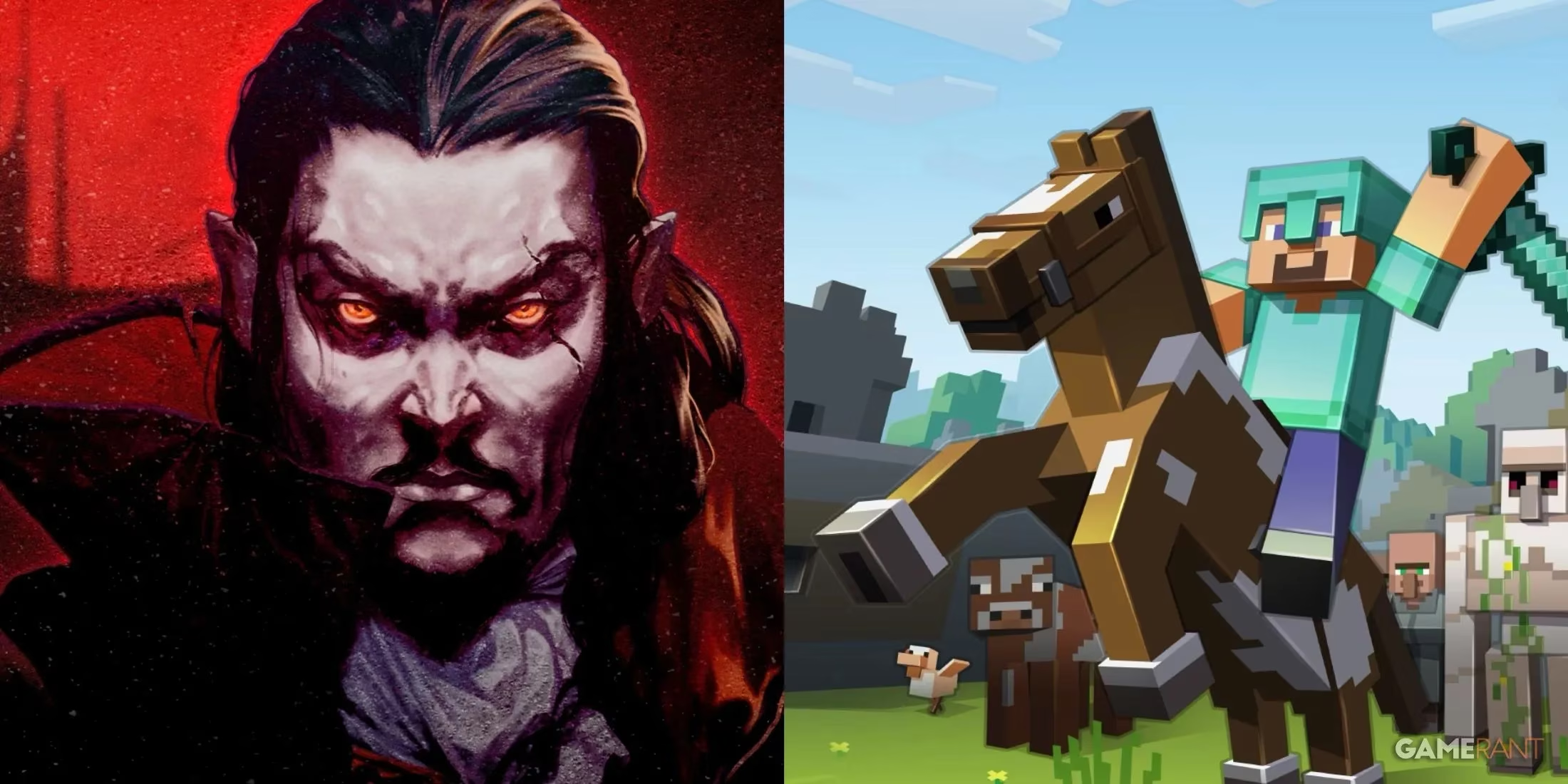
🔄 The Vampire Survivors Blueprint: Quality Over Quantity
Poncle, the developer behind Vampire Survivors, has made a conscious decision to move away from a torrent of small patches. The plan now? Larger, more substantial free updates released less frequently. This strategy is a direct response to the game's explosive growth following its PS4/PS5 launch and the wildly successful 'Ode to Castlevania' expansion. The goal is crystal clear: to ensure every piece of new content is meticulously polished and delivers a significant, memorable impact. Imagine waiting for a major expansion that completely overhauls an aspect of the game, rather than downloading a minor balance tweak every few weeks. This approach allows the development team to focus on ambitious, game-changing features without the pressure of a constant update treadmill.
What's on the immediate horizon? The community is eagerly awaiting Patch 1.13, which is poised to introduce a highly requested feature: full cross-save functionality across all platforms. This single update will fundamentally change how players engage with the game, allowing seamless progression between PC, console, and mobile. Furthermore, the holy grail for many fans—online co-op—remains in active development. While it may not arrive until later in 2026, its potential to redefine the core gameplay loop is immense. Beyond the digital realm, the buzz around a live-action adaptation and other 'cross-media' projects teased by Poncle adds an entirely new dimension to the Vampire Survivors universe, promising to expand its reach far beyond the screen.
⛏️ The Minecraft Method: Consistency is Key
On the other side of the spectrum, Mojang has charted a different course for Minecraft. After years of delivering one massive, feature-packed update each summer (think The Nether Update or Caves & Cliffs), the studio announced a new direction in late 2024. The future is about 'game drops'—a series of free, smaller updates scattered throughout the year. As Ryan Cooper, Head of Minecraft, stated, this shift aims to bring players "features to explore more frequently." This model fosters a sense of constant discovery and gives the team flexibility to react to community feedback and trends in real-time.
Why the change? For a game as vast and systemic as Minecraft, smaller, more targeted updates can often integrate more smoothly into the existing sandbox without overwhelming players or destabilizing the intricate balance of its systems. It allows Mojang to experiment with new ideas, introduce quality-of-life improvements, and add themed content (like new mobs or biome tweaks) that keeps the world feeling fresh and alive year-round, rather than saving all the excitement for a single summer blowout.
⚖️ Weighing the Strategies: Pros, Cons, and Player Impact
Both paths offer distinct advantages and present unique challenges for their respective player bases.
| Strategy | Pros 🟢 | Cons 🔴 |
|---|---|---|
| Vampire Survivors (Big, Infrequent) | - Higher polish & impact per update - Allows for major systemic overhauls - Builds immense anticipation |
- Longer content droughts - Risk of player attrition between updates - All eggs in one basket (if an update flops) |
| Minecraft (Small, Frequent) | - Constant stream of novelty - Agile response to feedback - Maintains consistent community buzz |
- Updates may feel insubstantial - Less room for groundbreaking new mechanics - Potential for feature creep or inconsistency |
The success of each method hinges entirely on managing player expectations. Vampire Survivors players must learn to savor the depth of a single large update, while Minecraft's community will need to appreciate the steady drip-feed of novelty. Ultimately, both strategies are a testament to the games' longevity. They are no longer in 'launch mode' but in 'legacy mode,' requiring thoughtful, sustainable plans to keep their worlds engaging for the next decade.
🎯 The Bottom Line for Gamers in 2026
For players, this strategic shift is ultimately a win. It represents developers who are confident in their games' foundations and are thinking long-term. Vampire Survivors is betting that its core loop is strong enough to retain players through longer development cycles, promising a payoff of unparalleled, polished expansions. Minecraft is leveraging its status as a digital playground, ensuring there's always a new toy or tweak to discover, keeping the creative spark alive daily.
This divergence proves there is no single 'right' way to update a game. The best path forward is the one that aligns with the game's core identity and the community's engagement patterns. In 2026, one thing is certain: both Vampire Survivors and Minecraft are not just surviving; they are strategically evolving to ensure they remain at the pinnacle of the gaming world for years to come. The result? Players of both titles have incredibly exciting, albeit different, journeys to look forward to. 🚀
Comments