Sandbox games have always been a canvas for imagination, giving players the tools to shape entire worlds from fistfuls of dirt and a few wooden planks. But a good canvas needs a focal point—something that challenges the painter beyond the frame. Boss battles serve exactly this purpose, injecting a dose of narrative tension into otherwise open-ended adventures. Yet not all sandbox titles weave these epic confrontations into their worlds with the same finesse. Years after their respective launches, Valheim still demonstrates a superior mastery of boss integration compared to Minecraft, even as we settle into 2026. While Mojang’s blocky universe remains a cultural titan, its method of quarantining bosses in alternate dimensions feels increasingly like tucking away the main course of a meal in a separate room—you can enjoy it, but it never really joins the party.
In Minecraft, bosses like the Ender Dragon and the Wither exist in isolated pockets: The End and the Nether, respectively. This design choice was a clever solution to an early sandbox problem—how do you prevent a new player from stumbling into a lethal fight two minutes after spawning? Shunting the biggest threats into separate dimensions turned boss encounters into deliberate expeditions rather than random disasters. The downside, however, is that the Overworld—the prime realm where most players spend 90% of their time—remains relatively uneventful in the long run. Defeating the Ender Dragon yields a spectacular XP shower and a gateway back home, but the grass, the cows, and the creeping nightfall of the Overworld barely blink. The world feels like a library where the most thrilling books are locked in a basement vault; you know they exist, but they never change the atmosphere of the reading room.
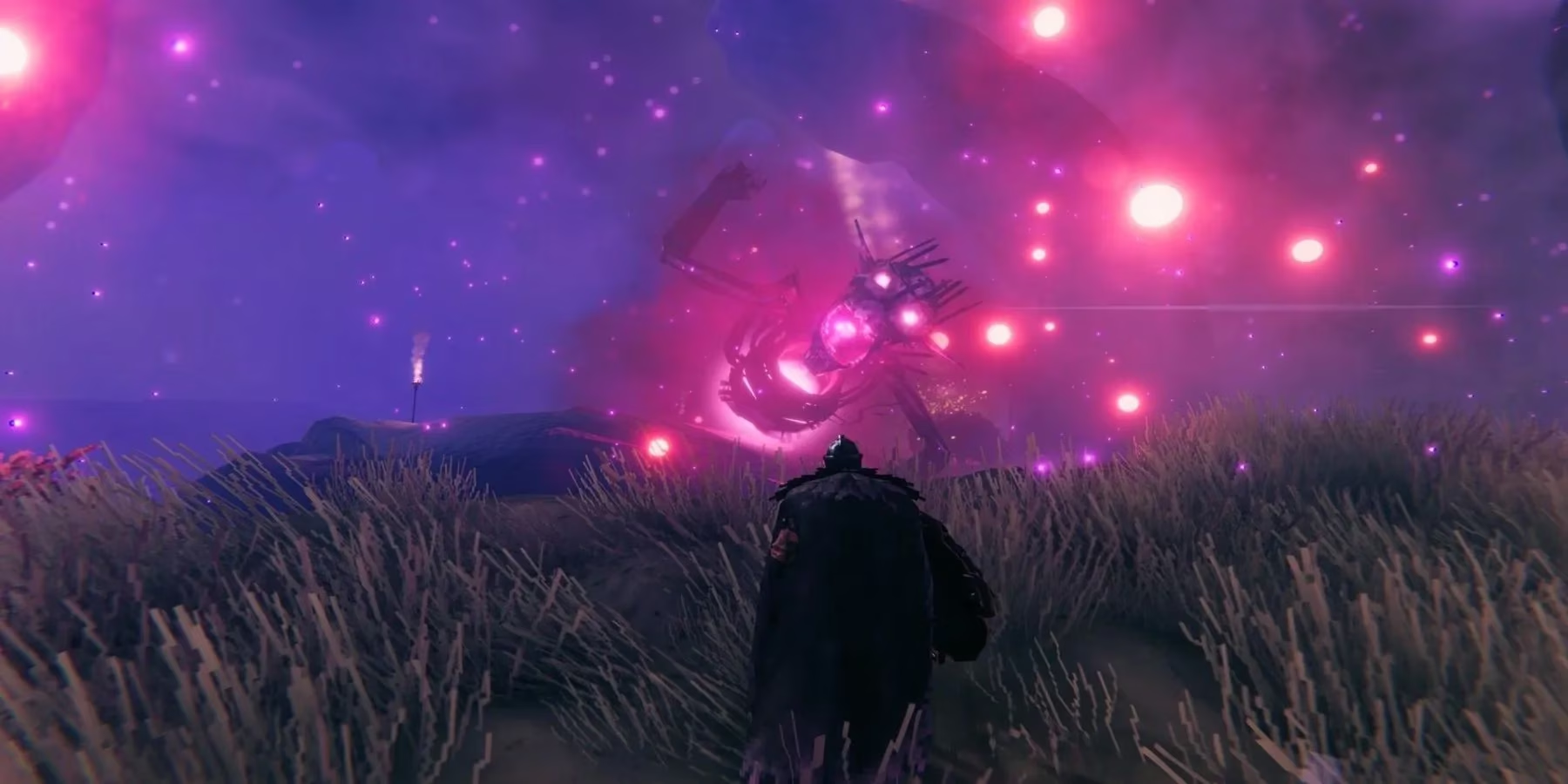
Valheim, on the other hand, places all its biome bosses within the same continuous world, like seasoning that infuses the entire dish instead of being served as a dry side garnish. Each boss—from the lightning-struck deer Eikthyr to the skeletal horror Yagluth—resides in a corresponding biome, and players must gather offerings at mystical altars to summon them. This summoning ritual acts as a gatekeeper without severing the boss from the realm itself. It’s an elegant compromise: novices won’t accidentally trip over Bonemass while picking berries, but the land still breathes with the weight of these creatures. Once a boss falls, the world responds in tangible ways. After defeating Yagluth, for instance, Fuling patrols begin to appear at night across multiple biomes, a sign that the hierarchy has crumbled and scattered its minions. It resembles a keystone predator removal in an ecosystem—remove the apex, and the underlings swarm into new territories, reshaping the player’s daily survival.
This ecological ripple effect is Valheim’s secret sauce. Bosses aren’t just spike damage encounters; they are living levers that alter the entire sandbox state. The swamp turns more oppressive until you silence its master; the mountains feel unyielding until Moder’s motherly draconic wrath is quelled. By contrast, slaying Minecraft’s Wither unlocks a beacon beam that can grant buffs, but it does little to rewrite the behavior of skeletons or creepers in the neighborhood. The worlds feel static, their climaxes occurring off-stage instead of rewriting the script.
Part of the genius behind Valheim’s approach stems from its procedural generation engine, which weaves biomes into a sprawling tapestry rather than a patchwork of separate dimension portals. This single-world philosophy also enriches the travel narrative: a journey to fight the Elder means physically crossing dark forests and sailing across treacherous seas, building an organic story along the way. Every boss defeat becomes a milestone you can point to on the map, not a distant memory from a parallel reality you may never visit again. For Minecraft to capture a similar magic in 2026 and beyond, it doesn’t need to abandon its multidimensional formula entirely—the End and the Nether are iconic in their own right. However, Mojang could experiment with a new game mode or an optional world toggle where certain bosses gain the ability to manifest in the Overworld after specific criteria are met. Picture summoning the Ender Dragon in a corrupted bastion near a Stronghold, or triggering a zombie siege led by a Wither-like entity once a village reaches a certain size. Even a subtle shift—like having pillager patrols grow bolder after the Wither is defeated—would transform bosses from distant legends into dynamic forces.
Valheim’s success proves that randomly generated worlds can house overworld titans without breaking the survival experience. Its bosses feel less like coded gatekeepers and more like the aching heartbeats of a living wilderness. As players continue to shape their own sagas, the games that make their greatest threats feel like genuine inhabitants of the world—rather than closet monsters—will always build the more resonant tales. Minecraft may have built the sandbox, but Valheim taught us how to put the storms inside it.
Comments